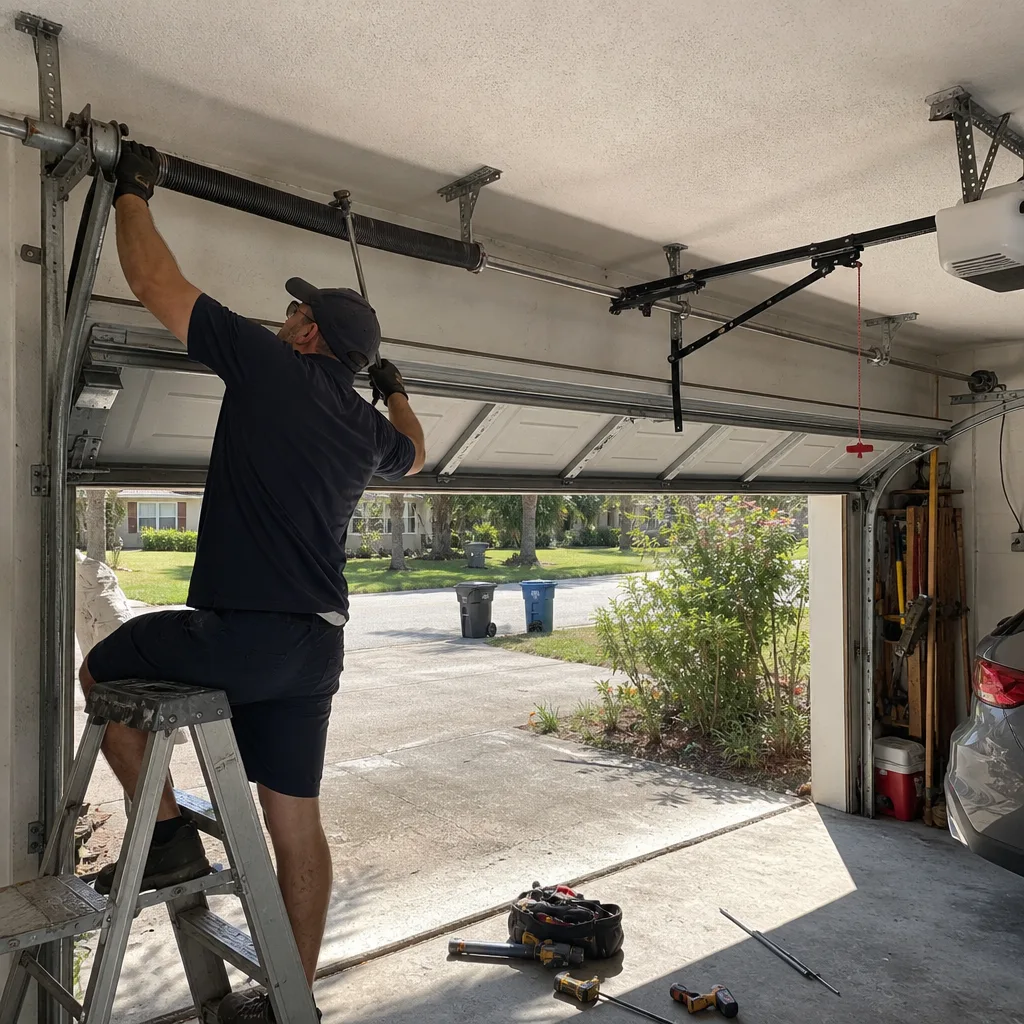
Last updated November 23, 2026
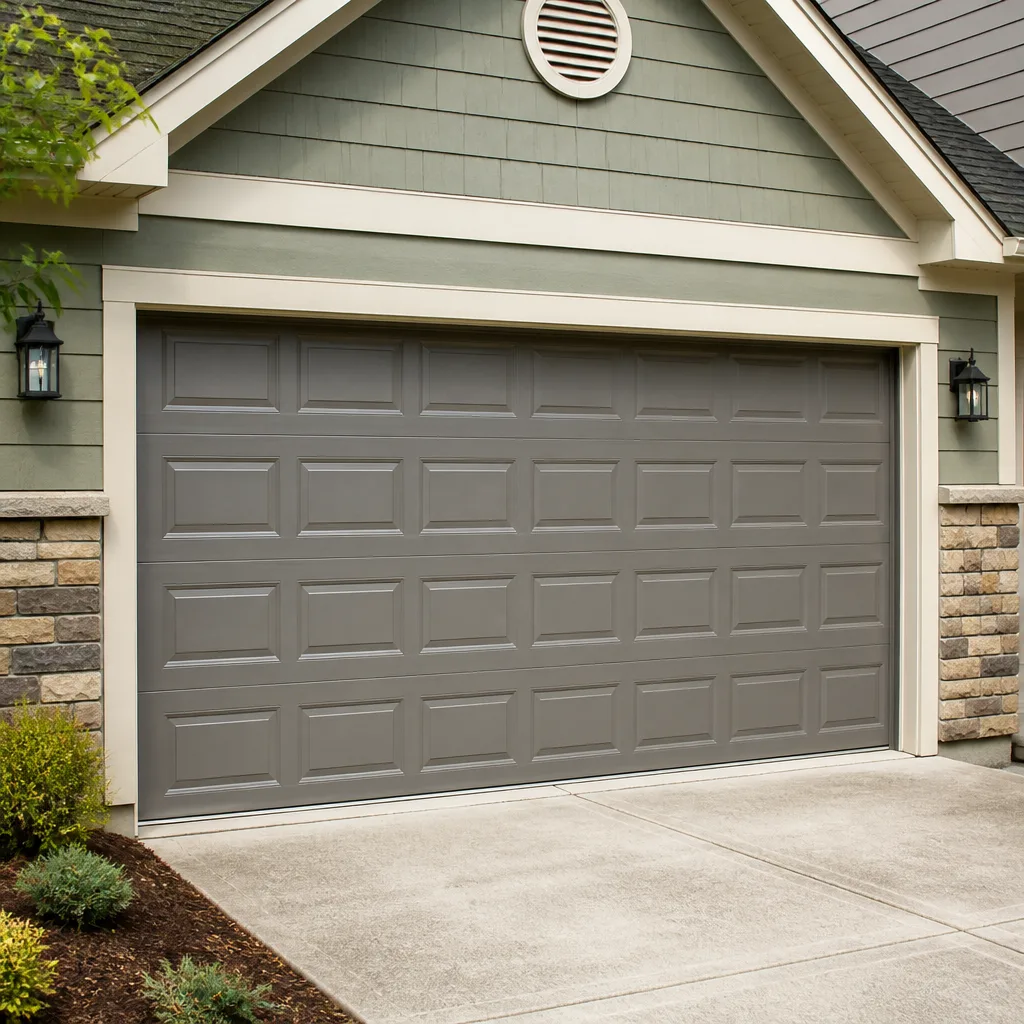 Raised-panel steel
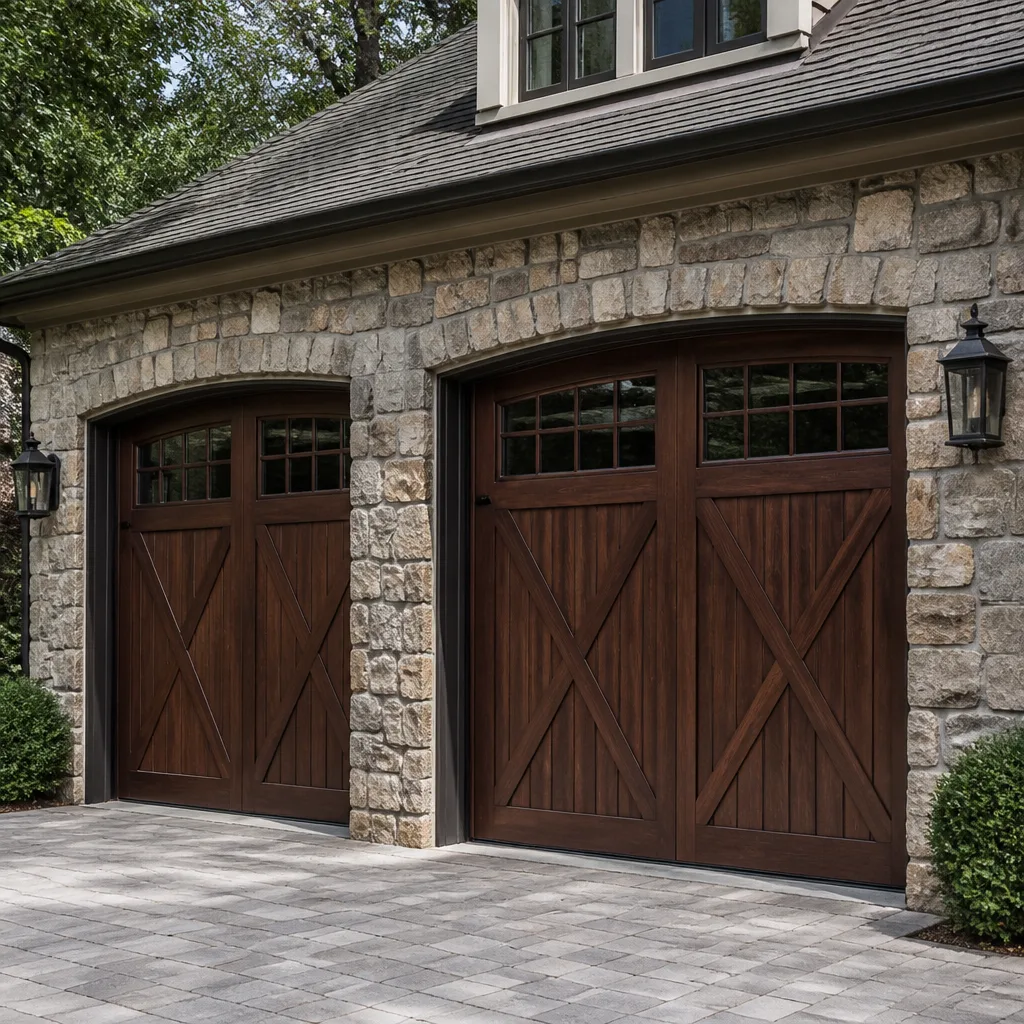 Carriage house
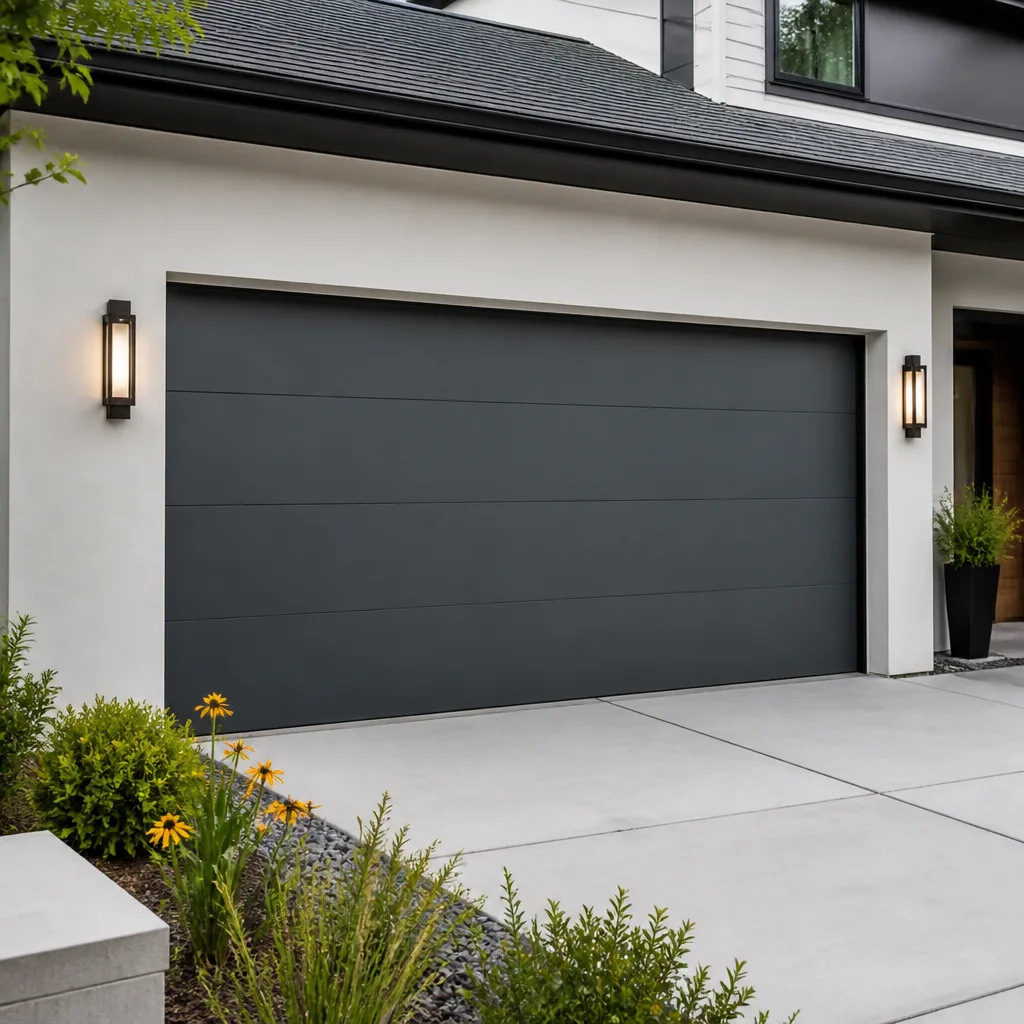 Modern flush
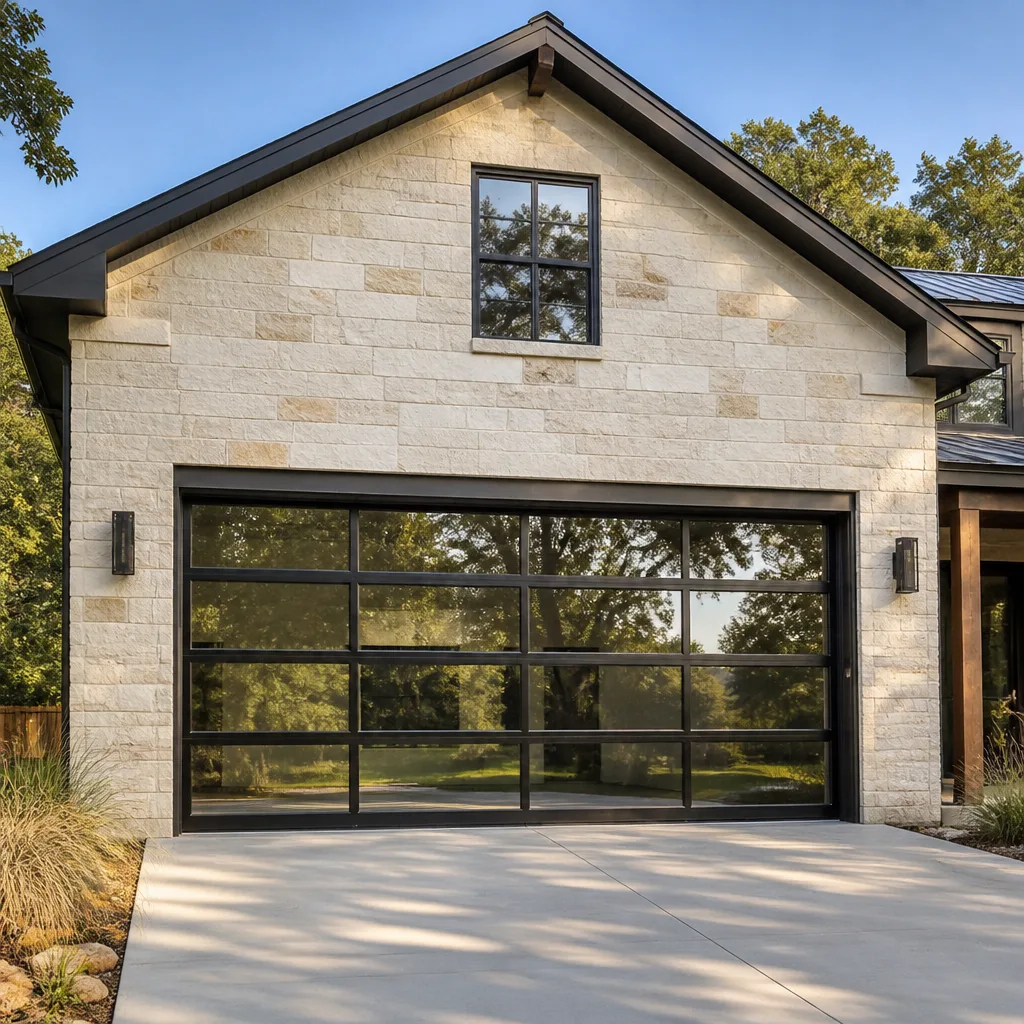 Full-view glass
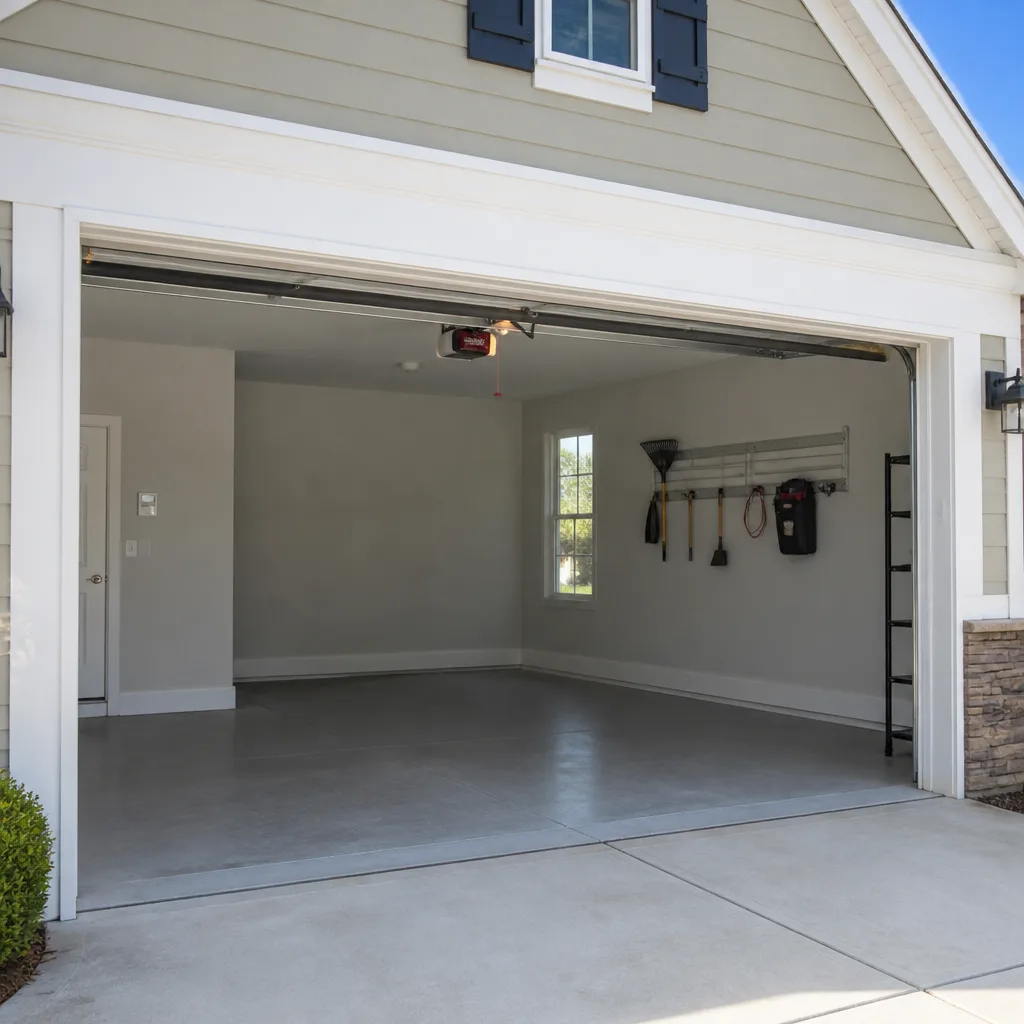 LiftMaster openers
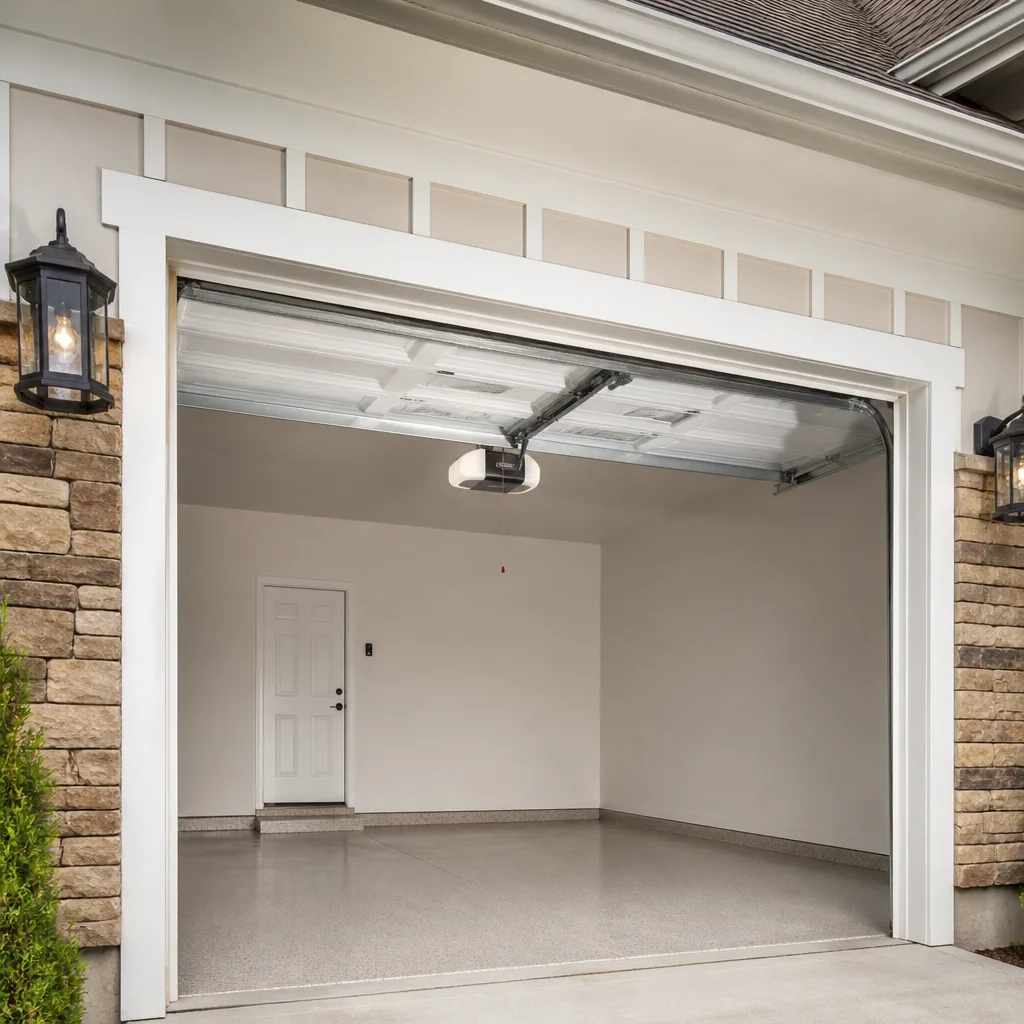 Chamberlain openers
Full 25-point door and opener safety check with every visit - springs, cables, rollers, tracks, and your LiftMaster or Chamberlain opener included
You get a price before we start. It does not change when the pro arrives.
Get your free estimateThe Complete Guide to Garage Doors in Pinellas Park
Most garage door guides are written for Ohio. They talk about ice dams, freeze-thaw cycles, and snow load, and then they hand you advice that quietly falls apart the moment you try to apply it in Pinellas Park. Doors here don’t fail from frost. They fail from months of heavy humidity, hardware that starts to pit, wind that has to be planned for before a door is ever hung, and the simple fact that a lot of Florida garages aren’t really garages anymore. This guide walks through the decisions that actually matter in Pinellas Park: which doors are legally installable under Florida Product Approval, why the type of metal on your hinges is a long-term money question rather than an upsell, how wind ratings really work, which materials wear fastest in this climate, and how to match a LiftMaster or Chamberlain opener to the door and the way your household uses it.
Quick Answer
For most Pinellas Park homeowners, the right garage door is an impact-rated or wind-load-rated steel or aluminum door with Florida Product Approval documentation, paired with stainless or heavily galvanized hardware to survive subtropical humidity. Get the wind rating and product approval confirmed before you order, size your opener to the weight of the door, and budget for hardware replacement on a shorter cycle than you’d expect inland.
Styles & brands we work with
- Raised-panel steel
- Carriage house
- Modern flush
- Full-view glass
- LiftMaster openers
- Chamberlain openers
Table of Contents
- What Florida Product Approval Means for Pinellas Park Doors
- Wind-Load Ratings vs. the Actual Wind Zone in Pinellas County
- Galvanized vs. Stainless: The Hardware Question That Pays Off
- Which Door Materials Hold Up in the Pinellas Park Climate?
- Matching LiftMaster, Chamberlain, and Genie Openers to Your Door
- Springs and High-Tension Hardware: What You Need to Know
- What Garage Door Work Typically Costs in Pinellas Park
- A Maintenance Routine Built for Humidity and Use
What Florida Product Approval Means for Pinellas Park Doors
Florida Product Approval (FPA) is the state’s system for certifying that a building product meets the wind and impact performance requirements set out in the Florida Building Code. Every exterior door and window installed in the state has to be backed by an approved product listing or an approved engineering evaluation. A garage door without an FPA number is not something a reputable installer should be hanging on your opening.
That’s a different standard from what most of the country works with. In Ohio or Missouri, a garage door is a convenience and a design choice. In Pinellas County it’s part of your building’s wind envelope, and it has to be documented as such. That changes the buying process from “pick the style you like” to “confirm the approval, then pick the style you like from the list.”
What that means in practice:
- The FPA number should appear on the door’s documentation, not just in the showroom conversation. Ask for it in writing.
- The rated configuration matters. A door rated with a specific set of hardware and reinforcement is only approved at that configuration, so substituting hinges or struts can void the approval.
- Permits for a new door installation or a material change usually pull from your city’s building department, and Pinellas Park is no exception. Our advice has always been the same: call the city building department directly if you want to know exactly what a permit requires for your address because they are the final word and we are not the code official.
- Replacement of an existing approved door with an identical approved model is often simpler than a change in door type, but the details still get confirmed at the permit desk.
A short conversation about a garage door repair often turns into an FPA question, especially if the panels have warped or the structural reinforcement has rusted through. Once a rated door loses its rated hardware, you’re working with a door that no longer matches its documentation, and that’s worth knowing before a future sale inspection or insurance review turns it into a surprise.
Wind-Load Ratings vs. the Actual Wind Zone in Pinellas County
Wind-load rating is the pressure a door is engineered to withstand. It is not the same thing as “it’s a hurricane door.” A lot of guide material treats those as synonyms, and they aren’t. Wind-load ratings are calculated for a design pressure, and design pressures in Florida are set by wind zone, exposure category, and building characteristics. Pinellas County sits in a high-wind region, which means a door that works fine on an inland lot may not meet the design pressure your opening requires once you factor in exposure and building height.
Why the distinction matters for Pinellas Park:
- Design pressure is per opening. Two doors on the same street can carry different requirements if one is on a taller wall, more exposed, or protected differently. The rating on the box isn’t automatically the rating your opening needs.
- Reinforcement is part of the rating. The rated configuration usually involves struts, heavier tracks, and heavier gauge hinges. If a door is hung without them, you have a door with a label that doesn’t match reality.
- Windows and glazing change it. A door with a full row of glazing carries different performance numbers than the solid version. The FPA listing covers the specific model, so don’t assume the glass version is covered by the solid door’s paperwork.
- Installation quality shows up under load. A door rated to a given pressure and bolted to a weakened jamb won’t behave the way the rating says it will. The hardware and the anchoring are part of the system.
When we walk through a home in Pinellas Park and look at an older door, the reinforcement is usually the first thing we check. Stamped steel struts that were fine ten years ago will often have rust at the fasteners, and the panels will have picked up enough flex that the door no longer closes flat. That’s not cosmetic. On a rated door, it’s the difference between a system that performs as designed and one that doesn’t.
Galvanized vs. Stainless: The Hardware Question That Pays Off
Hardware is where the years of a garage door’s life actually play out in Florida, and it’s the part most guides skip. In a subtropical Pinellas Park environment, hinges, rollers, and fasteners are exposed to constant humidity and temperature swings. The two common routes are galvanized steel, which carries a zinc coating for corrosion resistance, and stainless steel, which resists corrosion because the alloy itself doesn’t rust under normal exposure.
Galvanized is cheaper to buy. Stainless tends to hold up better through years of humidity, especially at the moving parts where the coating wears away as hinges pivot and rollers spin. The difference is not an upsell; it’s a decision about how often you’ll be calling for hardware replacement.
Where the choice actually shows up:
- Hinges – the pivot points lose their plated coating first. Once the plating is gone, the hinge starts to bind and produce noise, and eventually it fails at the knuckle.
- Rollers – nylon rollers tend to outlast steel rollers in humid conditions, but the steel stems still need protection. Stainless stems hold up better than galvanized over time.
- Fasteners and track bolts – the parts you never look at but rely on the most. Corroded fasteners are a common source of track misalignment.
- Springs and cables – typically oil-tempered steel. Keeping them lightly lubricated matters more here than it does in a dry climate. See our garage door spring repair page for how springs behave under continuous humidity.
An honest comparison: upgrading to stainless on a standard two-car door usually adds cost at the front, and it tends to delay the hardware replacement cycle by years in this climate. The exact math depends on the door and usage, but the direction is consistent. If you’re keeping the door long-term, stainless is worth the conversation. If you’re selling in the next year or two, galvanized with a maintenance routine can be perfectly reasonable.
Which Door Materials Hold Up in the Pinellas Park Climate?
Not all door materials wear the same way in Florida. Steel, aluminum, and wood composite are the three most common residential choices, and each has a distinct failure pattern in the Pinellas Park climate. Steel doors lead the market for price and paintability, but the finish is what determines life. Aluminum resists rust well but can dent and carries different care needs. Wood composite gives a warmer texture than steel or aluminum, and it needs the most attention in humidity.
Here’s how each holds up:
| Material | Key Strength | How It Wears Here | Typical Replacement Timeline |
|---|---|---|---|
| Steel (painted, with strut reinforcement) | Cost, color range, impact-rated options | Paint failure at the bottom edge is the first failure. Dents carry into the panels. Rust reaches the seams before the panels. | Roughly 12-20 years with repainting every 4-6 years |
| Aluminum | Corrosion resistance, lighter weight | Rust isn’t the issue. Denting and warping from storm damage are, and thinner profiles flex under wind load. | Roughly 15-20 years with hardware replacement along the way |
| Wood composite / overlay | Texture and design flexibility | Humidity is the concern. Finish requires regular recoating, edges swell, and interior backing needs to stay sealed. | Roughly 10-15 years with disciplined finish maintenance |
The timelines above are typical rather than a strict rule, and they assume reasonable maintenance. A steel door that gets repainted when the first rust shows up at the bottom edge will outlast a wood composite door that never gets re-sealed, and the reverse is also true. In Pinellas Park, the biggest variable is a door that faces the afternoon sun and takes the moisture load from a nearby tree canopy. Both widen the gap between how materials age in dry climates vs. here.
Doors in single-family Pinellas Park neighborhoods tend to be subject to this cycle more than doors on shaded lots with good drainage. The direction of exposure, the nearby vegetation, and the grade of the driveway all influence how quickly a door’s finish breaks down. When we look at a door for replacement, we evaluate all three before we talk about materials.
Matching LiftMaster, Chamberlain, and Genie Openers to Your Door
An opener matched to the wrong door is a lifelong headache. Too small, and it strains, overheats, and shortens its own life. Too large, and it slams the door against the floor because its force and speed don’t match the weight. The right match is about weight, size, cycle count, and the way the household uses the garage. LiftMaster, Chamberlain, and Genie all make openers that suit different situations, and the correct choice usually comes down to matching the specific model to the door rather than picking a brand first.
A simple framework:
- Measure the door first. Weight and size determine the opener class. A heavier door with glass or insulation can sit well above the range of a standard unit, and the wrong choice shows up as strain, force-reset errors, and eventual failure.
- Count daily cycles. A garage used twice a day has different needs from one used as a home gym and main entrance with a dozen cycles a day. Higher cycle requirements call for a heavier-duty opener, and that’s especially true in Florida garages that have become living space.
- Match the opener to the door’s travel and balance. A door that isn’t balanced will overpower the opener and produce the impression of a failing opener. Our garage door opener repair visits often start by checking the door balance before touching the opener itself.
- Decide on smart features honestly. MyQ on a LiftMaster, Wi-Fi on a Chamberlain, or app integration on a Genie are useful for a garage that’s shared with family members or used as a delivery drop. They’re a waste on a door used twice a week.
- Plan battery backup. For Pinellas County households, a battery-backup opener is a practical consideration during storm-season outages. It isn’t a code requirement for a residential door, but it’s the kind of feature that earns its keep when the power is out for a few hours.
Florida garages get used as living and workspace more than most guides acknowledge. That means opener noise matters, and belt-drive units are usually quieter than chain-drive. It also means the opener should be sized for light daily use even if the door is small. In Pinellas Park, where a lot of homes have converted garages into home offices or storage annexes, we tend to lean toward belt-drive and a slightly larger class than the door alone would suggest. For help with any brand of opener, see our Garage Door Repair Pinellas Park page or give us a call and we’ll match the right unit to your door.
Springs and High-Tension Hardware: What You Need to Know
The springs are the single most safety-critical part of a garage door system, and they’re also the part most homeowners are least prepared to deal with. Torsion springs (mounted on a bar above the door) and extension springs (running along the horizontal tracks) both store enough energy to cause serious injury if a component fails or is handled incorrectly. That is not a warning to be dramatic. It’s the reason trained garage door technicians treat spring work with specific procedures and specific tools.
What a spring does for the door:
- Torsion springs balance the door’s weight through a shaft and cable system. Most modern Pinellas Park installs use torsion springs because they’re quieter, last longer than extension springs when properly matched to the door, and behave predictably under load.
- Extension springs run alongside the track and pull the door open with the help of a cable and pulley. They’re common on older installs and require safety containment if they aren’t already equipped with it.
- Springs are rated by cycle count, not by a fixed calendar life. A door used a dozen times a day will wear its springs down many times faster than a door used twice a day, and that pattern shows up clearly in Pinellas Park households where the garage has become the main entrance.
A spring that’s on its way out usually announces itself one of three ways: the door feels unusually heavy when you lift it by hand, the opener struggles to close it fully (or the door bangs back on close), or there’s a sharp crack from the garage followed by a door that won’t lift. If that happens, don’t try to operate the door and don’t try to remove the spring. Get a trained technician out to diagnose and replace.
One more local note. The high humidity in Pinellas Park means spring life is often slightly shorter than the cycle count suggests when a spring sits on a door that sees minimal use but constant moisture. Keeping the spring shaft lightly lubricated helps, and checking the balance every few months is a good habit. Anything beyond inspection should be left to a technician.
What Garage Door Work Typically Costs in Pinellas Park
Garage door pricing in Pinellas Park is set per job by written estimate, and the estimate depends on the door type, the opener class, the hardware grade, and whether the work needs a permit. Below are typical ranges for the most common jobs. These are estimates, not fixed prices, and your written quote is the number that sets the final cost.
| Service | Typical Range (per job) | Notes |
|---|---|---|
| Torsion spring replacement (single spring) | Typical range varies with door size and spring class | A matched pair is often replaced together, so the pair costs about twice a single-spring range |
| Extension spring replacement | Slightly lower than torsion, varies with door size | Inspect cables and containment at the same time |
| Opener replacement (standard residential) | Typical range varies with opener class | Belt-drive and battery-backup units sit at the higher end |
| Panel replacement | Varies with door line and panel match | Older doors can be hard to panel-match, which sometimes favors a new door |
| Full door installation | Wide range, set by door material and wind rating | Permit, FPA documentation, and rated hardware all factor in |
| Emergency service | Typically higher than a scheduled visit | Includes after-hours or priority access |
Every quote we give in Pinellas Park is agreed before any work starts. That means no surprise invoice after the door is open and the old spring is on the floor. If the actual work turns out to differ from what we quoted, the conversation happens before anyone touches a tool, not after. Call (833) 868-2268 for a free estimate.
Two pricing notes specific to this market. First, the hardware upgrade from galvanized to stainless adds cost up front but is often worth it for a door you intend to keep for the long haul. Second, if your door is in a rated configuration and the reinforcement has failed, the repair can end up including struts and heavier tracks, not just panels. That’s a quote-with-eyes-open situation, and it’s exactly why the estimate visit matters.
A Maintenance Routine Built for Humidity and Use
A maintenance routine for a Pinellas Park garage door has to account for the local humidity, the salt in the air near the bay, and the fact that the door is used more heavily in some homes than the manual assumes. The routine below is what we recommend as a starting point. None of it involves disassembling springs or working on the high-tension side of the system, and it’s all safe for a homeowner to handle.
- Once a month, listen to the door. A new squeak, a bang on close, or a grinding sound at the top of travel is information. Catch it early and you’ll usually be dealing with a hardware swap rather than a full system repair.
- Every three months, wipe down the moving parts. A light coat of a garage-door-rated lubricant on hinges, rollers, and the spring shaft goes a long way. Avoid heavy grease, which collects dust and grit.
- Every six months, inspect the door’s balance. Disconnect the opener (pull the release) and lift the door halfway by hand. A balanced door stays where you leave it. A door that falls or rises means the springs need attention.
- Every six months, check the bottom seal and weatherstripping. In Florida humidity, the bottom seal is the first thing to degrade. A cracked seal lets in water, insects, and the hot air that turns a garage into an oven.
- Once a year, look at the finish. Paint failure at the bottom edge of a steel door is the earliest sign of rust. A quick touch-up prevents years of damage.
- Once a year, test the safety reverse. Place a piece of wood flat on the ground in the door’s path and close it. The door should reverse on contact. If it doesn’t, the opener’s force settings or sensors need attention.
- After any storm, inspect before using. Look at the panels for warping, the tracks for alignment, and the spring for a visible break. If anything looks off, don’t run the door until a technician has seen it.
For a door that’s part of a rated system, the annual finish inspection isn’t optional. Once the paint fails and the panel starts to rust, the panel’s structural behavior under wind load changes, and the rating on the door’s documentation no longer matches the door you have. That’s the sort of thing a yearly inspection catches before it becomes expensive.
Common Mistakes to Avoid
- Buying a door without checking the FPA number. In Pinellas County, the FPA listing is part of the door’s legal status. Ordering a door first and asking about approval later has turned simple replacements into permit standstills.
- Replacing a spring with the wrong cycle rating. A cheap spring that matches the door’s size but not its usage pattern will fail far sooner than expected. The door’s weight and the household’s daily cycles both matter.
- Ignoring the rated configuration when replacing hardware. If a strut or hinge is swapped out for a lighter generic part, the door no longer matches its FPA documentation. That’s a real issue at resale and at insurance review.
- Choosing galvanized hardware on a door you intend to keep long-term. The savings at purchase tend to get eaten by replacement cost in the Pinellas Park humidity. Stainless is a durable choice, galvanized is a budget choice.
- Putting a small opener on a heavy door. This shows up as force-limit errors, strain, and eventual failure. The opener should be sized to the door, not the other way around.
- Running the door with a broken spring. Even one more cycle can damage the opener, the door, and the tracks. Once a spring is broken, the door stays closed until a technician replaces it.
- Skipping the bottom seal and weatherstripping. In Florida, a failing bottom seal invites water, insects, and heat. It’s a small part that carries a lot of the door’s job.
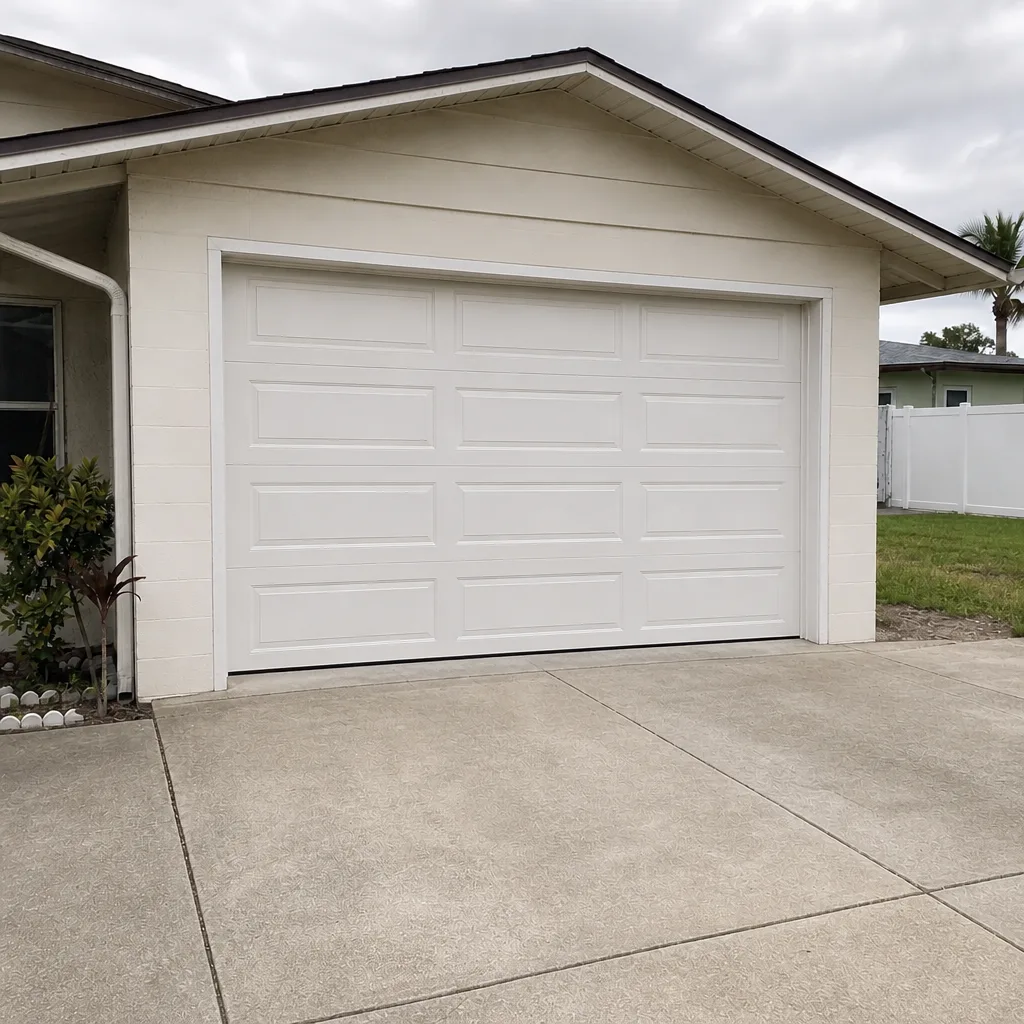
See the difference
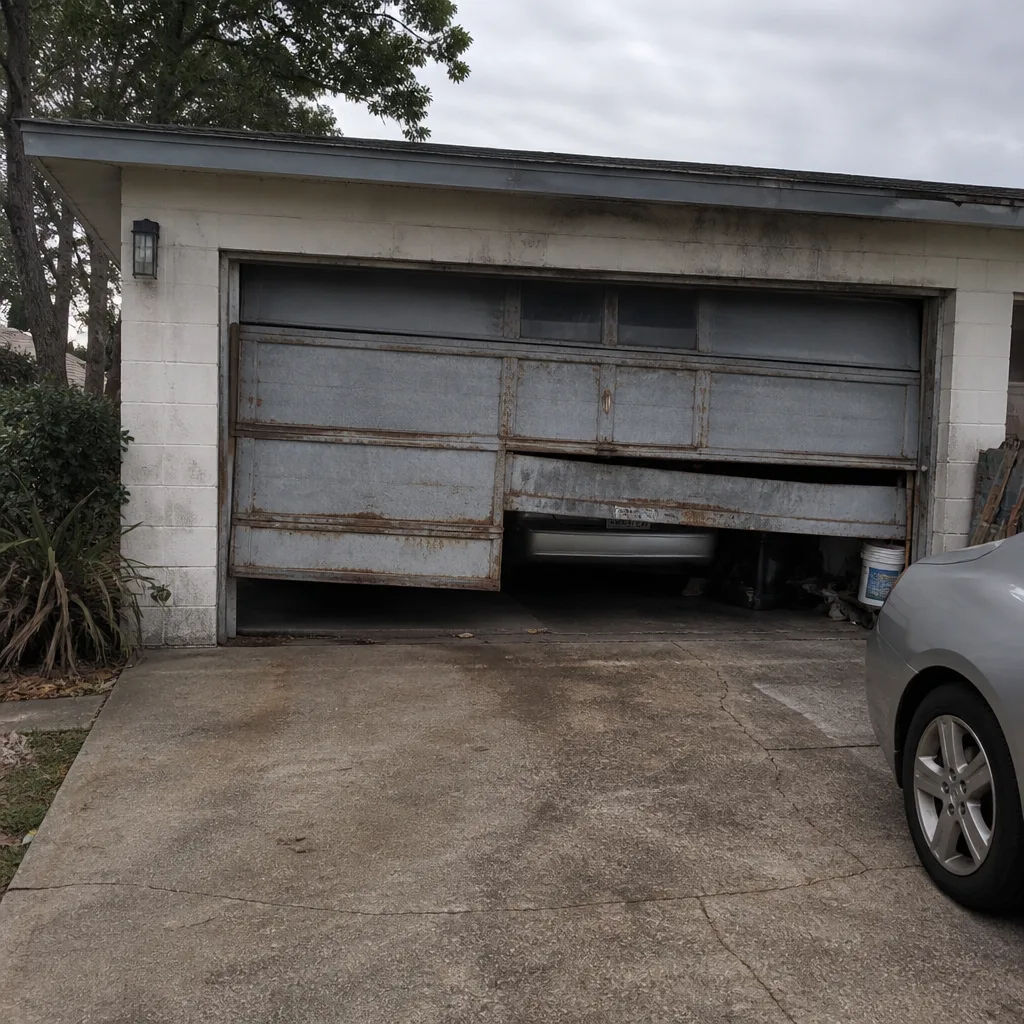 Before
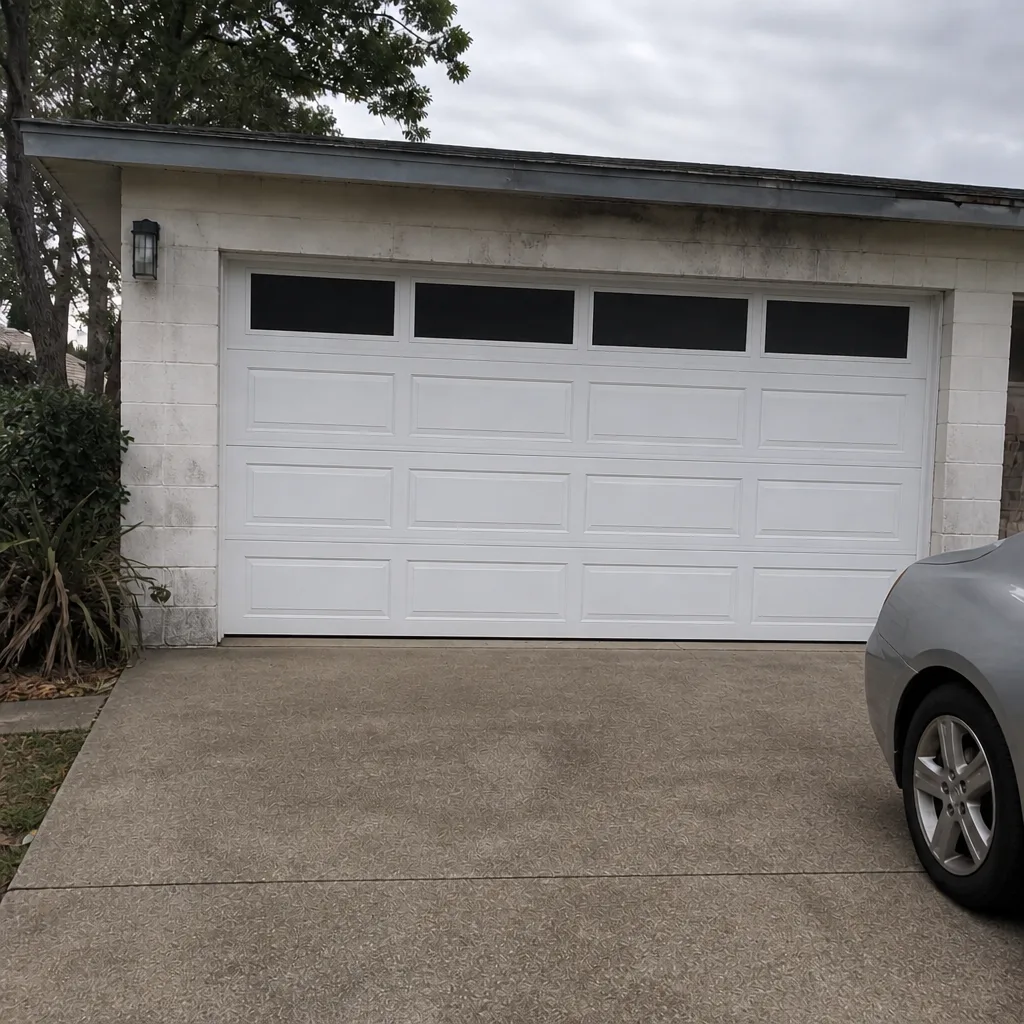 After
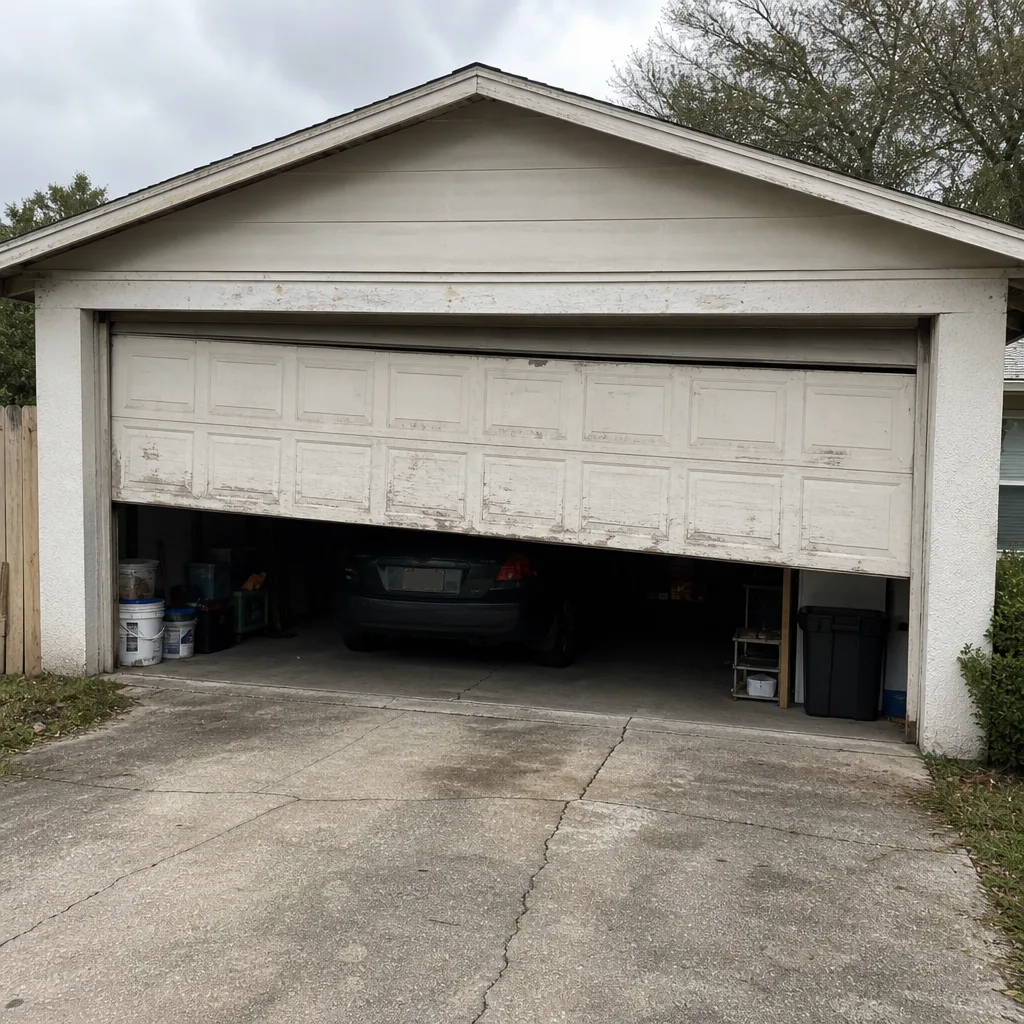 Before
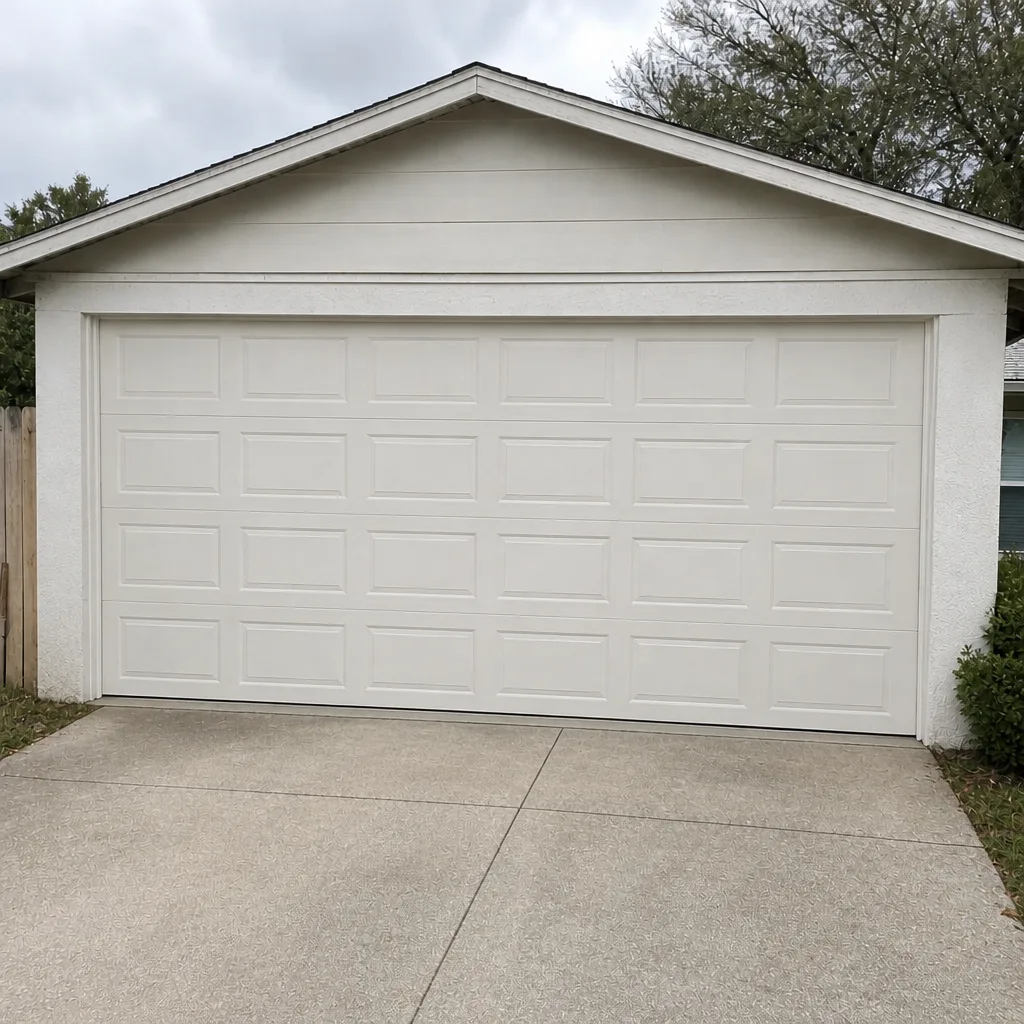 After
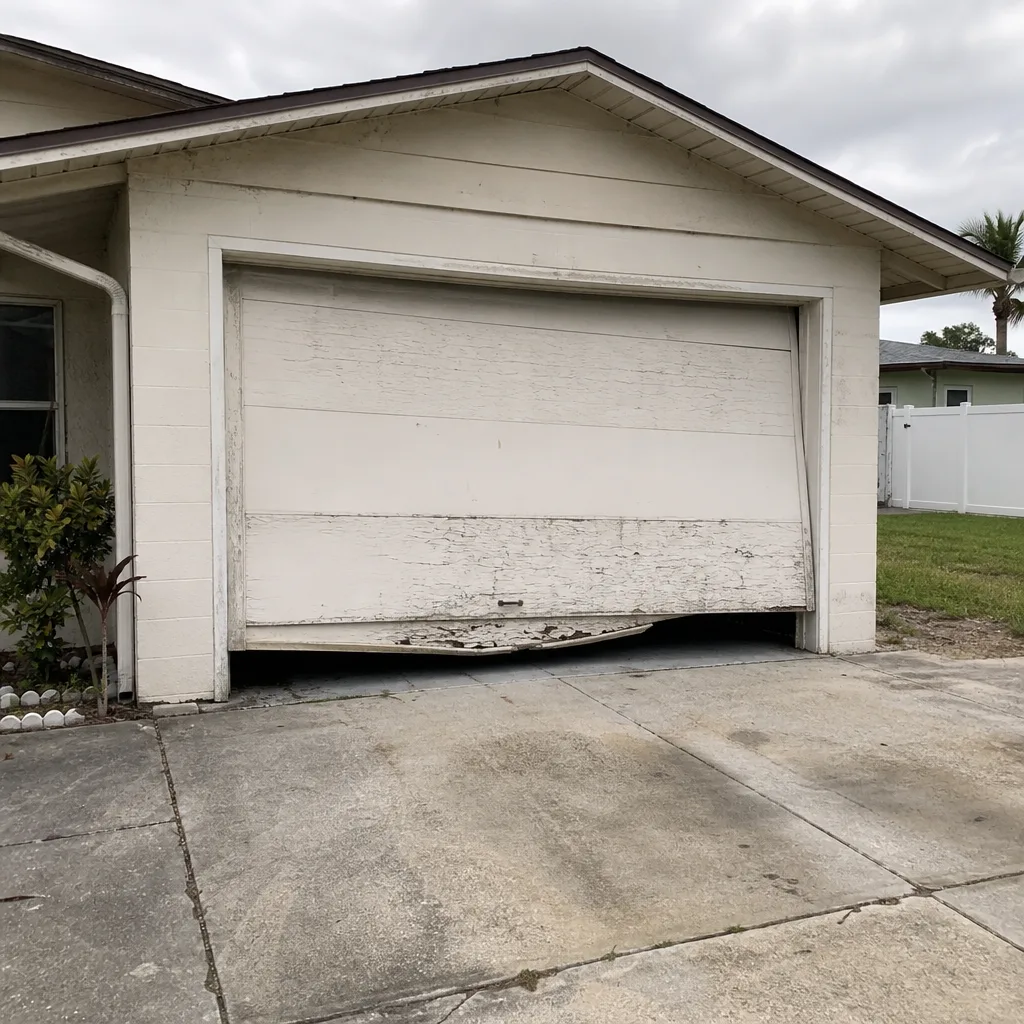 Before
 After
When to Call a Professional
Some garage door work is genuinely DIY-friendly – lubrication, visual inspection, testing the safety reverse, replacing a bottom seal. Anything involving springs, cables, and the high-tension side of the system is not, and that’s not a marketing line. The stored energy in a torsion spring is enough to cause serious injury in a fraction of a second, and specialized tools are required to release and re-tension the system safely. Call a professional when the door won’t lift, when a spring is broken or visibly distorted, when the door comes off track, when the opener cycles but doesn’t move the door, when the door won’t stay closed, or when anything has gone out of alignment. Garage Door Repair Pinellas Park offers free estimates in Pinellas Park – call (833) 868-2268. Our technicians have up to 15 years of experience, and every call is handled by someone whose sole focus is garage doors.
Frequently Asked Questions
Yes, in almost every case. A new or replaced garage door installed in Florida is generally required to be a product with a valid Florida Product Approval listing or an approved engineering evaluation, and the door has to be installed in the rated configuration. Ask for the FPA number in writing and confirm the permit requirements with the Pinellas Park building department for your specific address.
It varies with door size, spring class, and whether the work is urgent, so we give a written quote before any work starts. A single torsion spring replacement is priced per spring; if a matched pair is being replaced together, the pair costs roughly twice the single-spring range. Call (833) 868-2268 for an exact quote – estimates are free.
For a door you’re keeping long-term, yes. The humidity in Pinellas Park wears plated coatings off hinges, rollers, and fasteners faster than a dry climate would, and stainless resists corrosion as a material property rather than a coating. Galvanized hardware is a reasonable budget choice for a shorter ownership horizon but tends to need replacement sooner.
A wind-load rating describes the pressure a door is engineered to resist. An impact rating describes how the door performs when struck by debris. Some doors carry both, some one or the other, and the two aren’t interchangeable. In Pinellas County, both can factor into what’s required for your opening, and the FPA documentation is the place to confirm what a given model actually carries.
A strained opener is usually reporting a door problem, not an opener problem. Failing springs, worn rollers, dried-out hinges, or track misalignment all increase the force needed to move the door, and the opener reaches its limit before the door does. Have a technician check the door balance first, then evaluate the opener.
Yes. We match openers from all major brands to the door’s weight, size, and the way your household uses the garage. A door used twice a week needs a different opener than one used a dozen times a day, and the sizing conversation happens before purchase, not after. Call (833) 868-2268 for a free estimate and brand guidance.
The Bottom Line
The right garage door for a Pinellas Park home is a specific combination, not a general one: a wind-load-rated, FPA-approved door in a configuration that matches its documentation; hardware that holds up to subtropical humidity; an opener matched to the door and to your household’s usage; and a maintenance routine that catches small problems before they become expensive ones. Get the approval and the rating confirmed before ordering, treat hardware grade as a long-term cost question rather than an upsell, and treat the spring as the safety-critical component it is. When you’re ready to talk specifics, garage door repair and full installation in Pinellas Park are our only trade, and we’ll give you a written estimate before any work begins. Call (833) 868-2268 for a free estimate.
Written by the team at Garage Door Repair Pinellas Park.