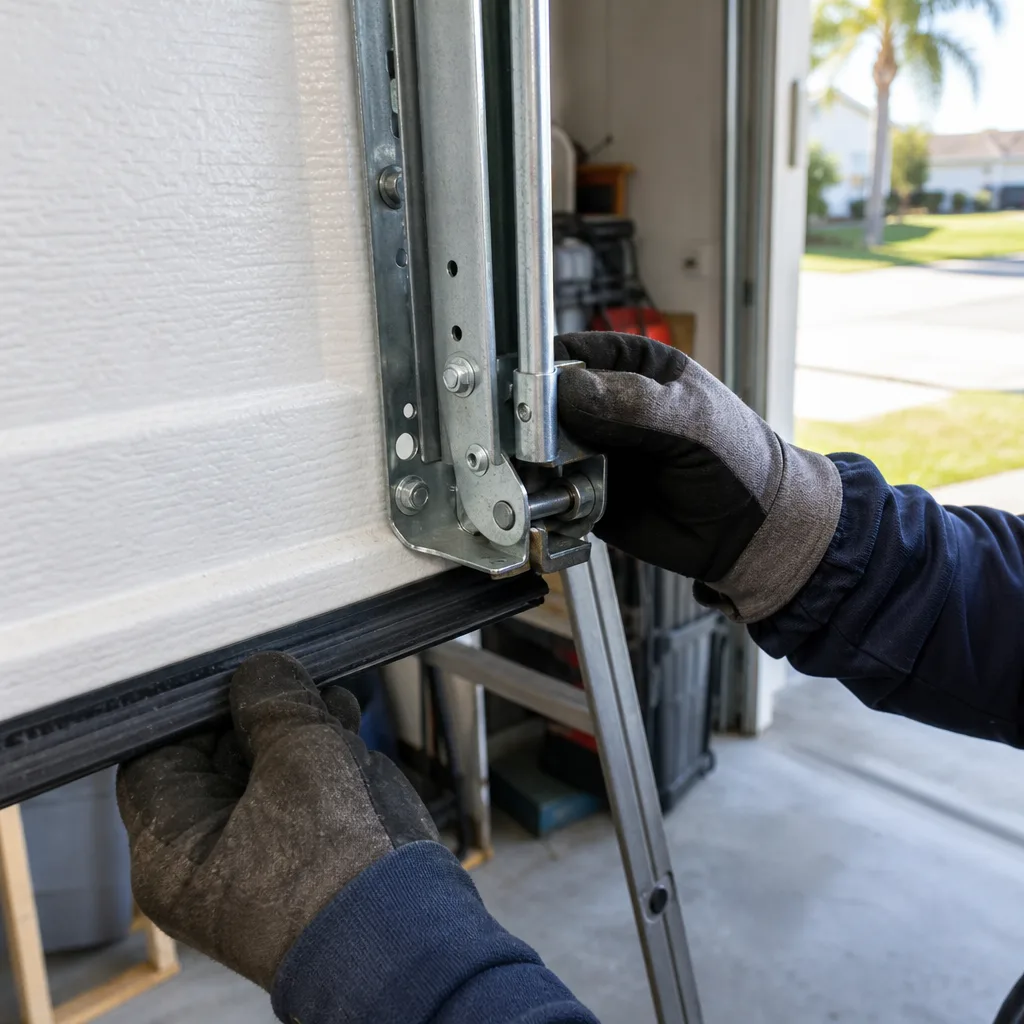
Last updated November 23, 2026
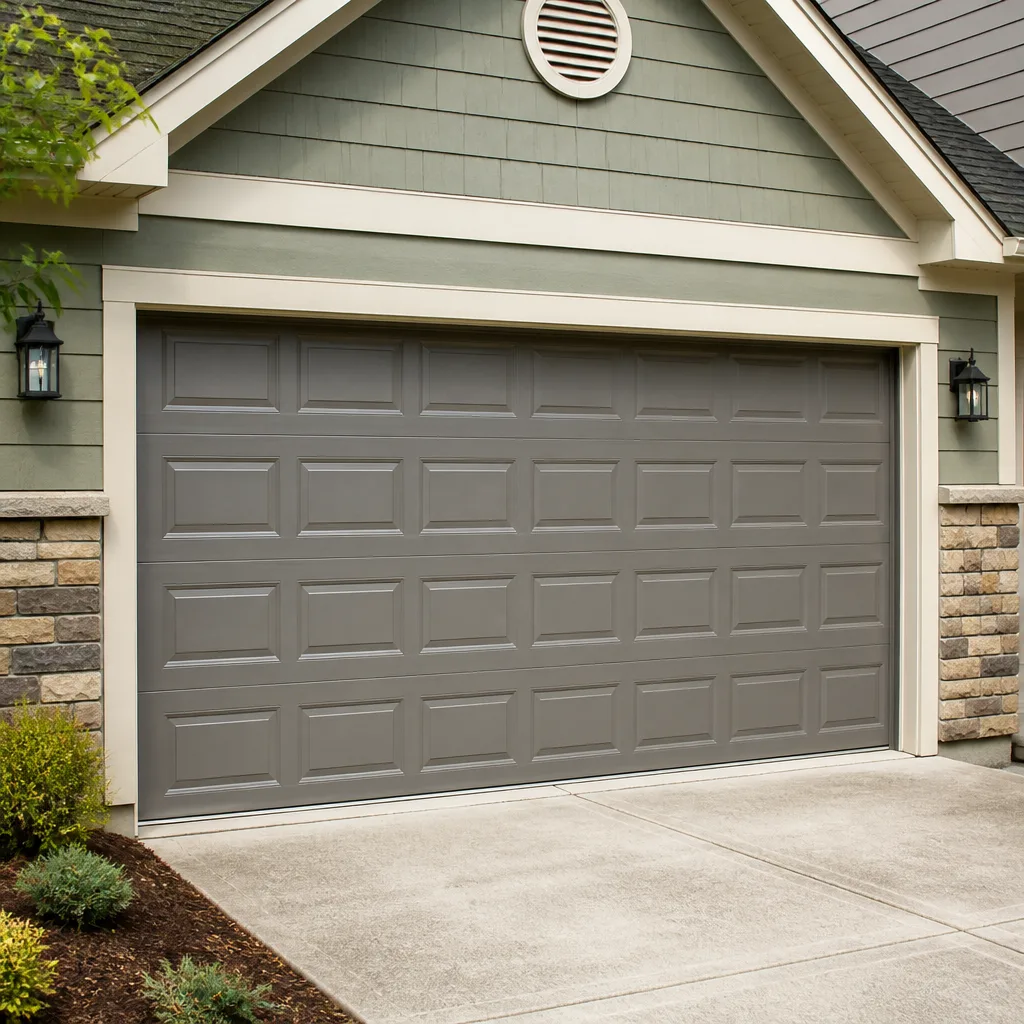 Raised-panel steel
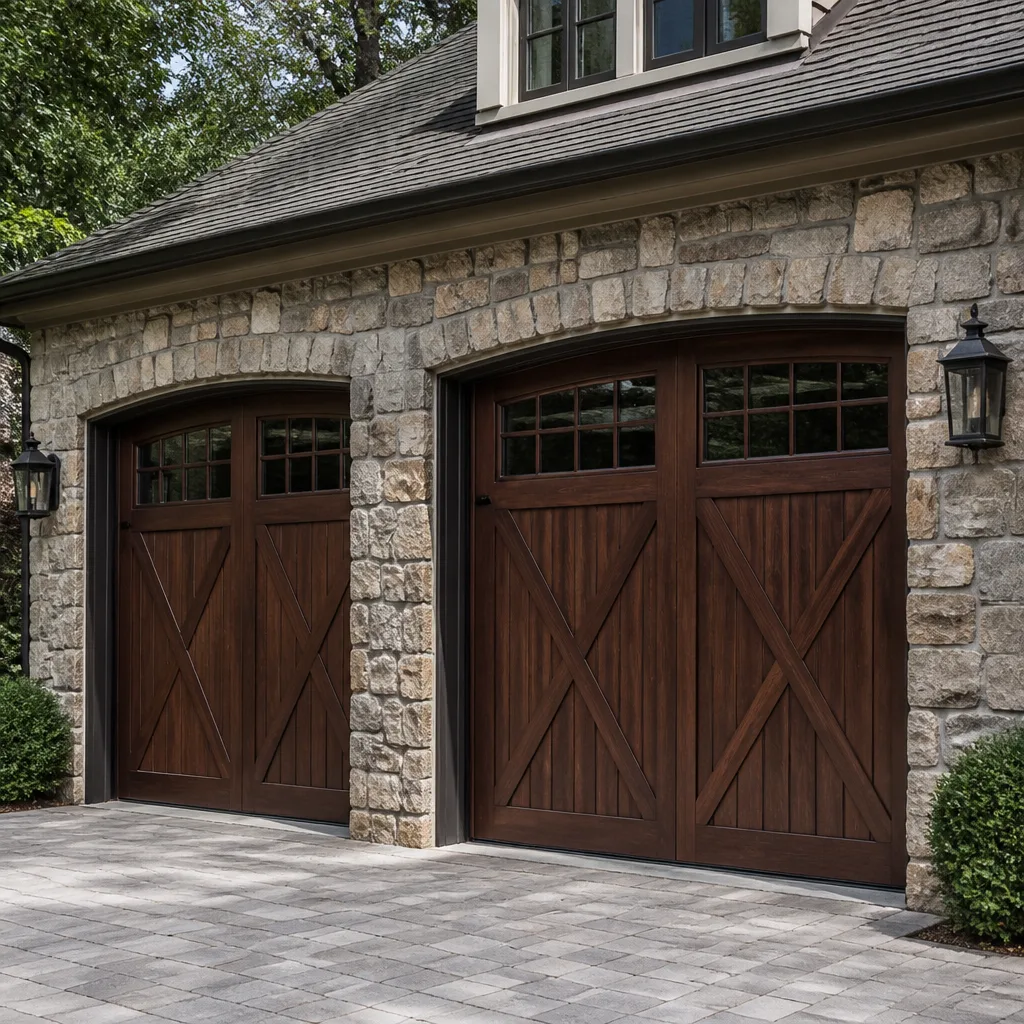 Carriage house
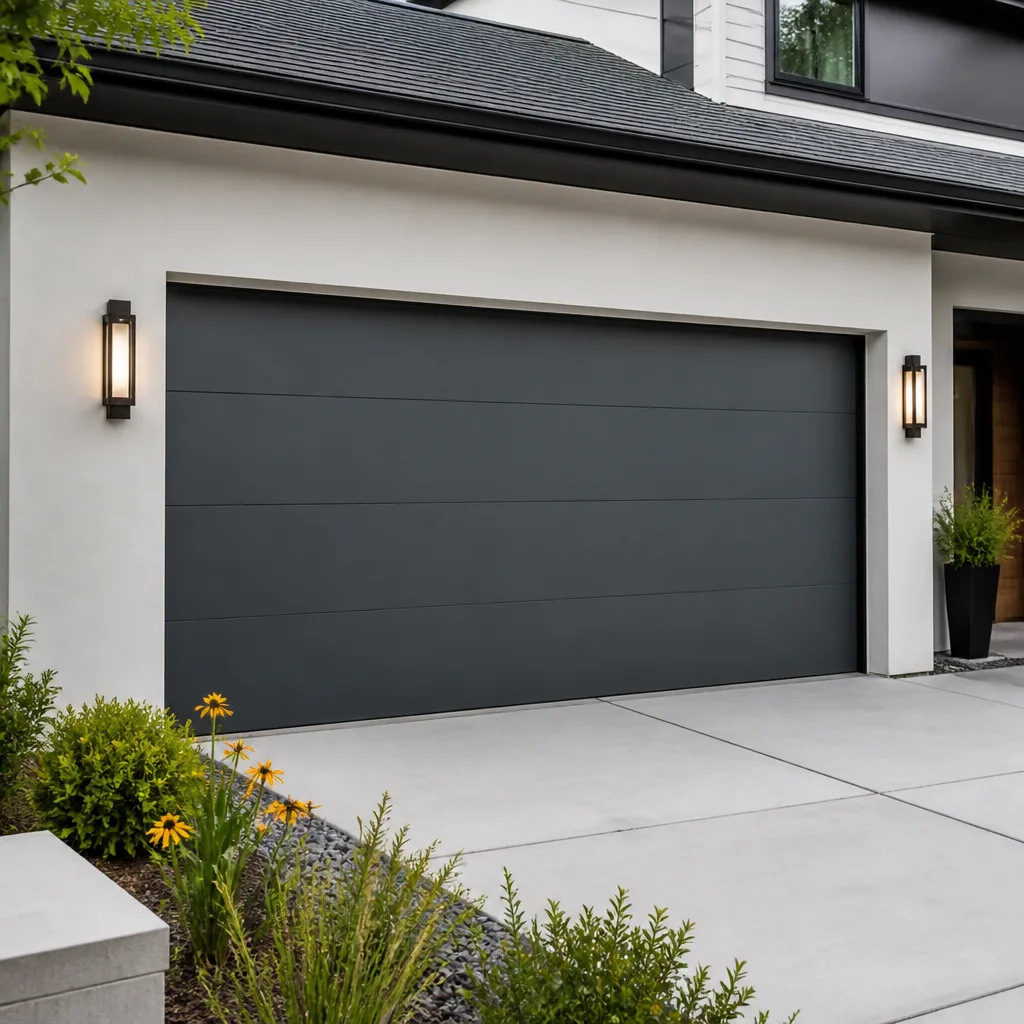 Modern flush
 Full-view glass
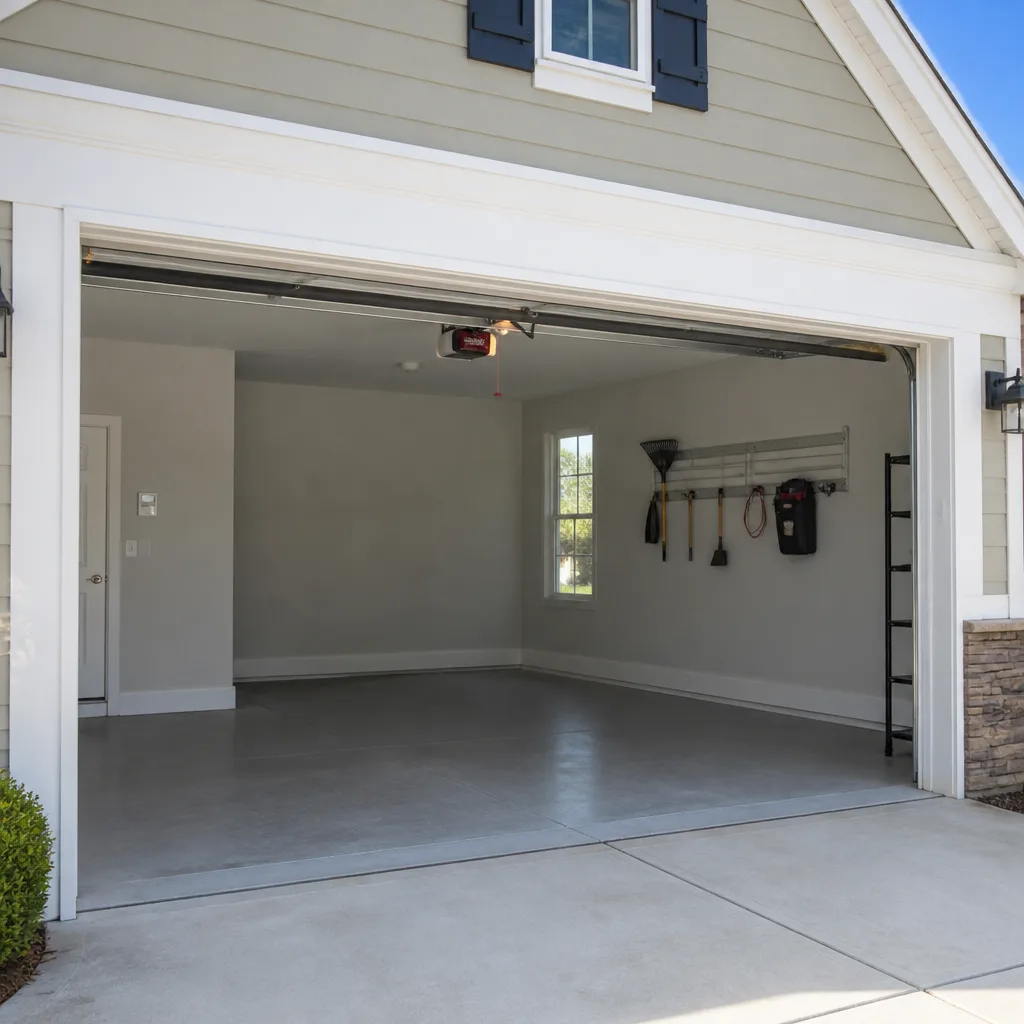 LiftMaster openers
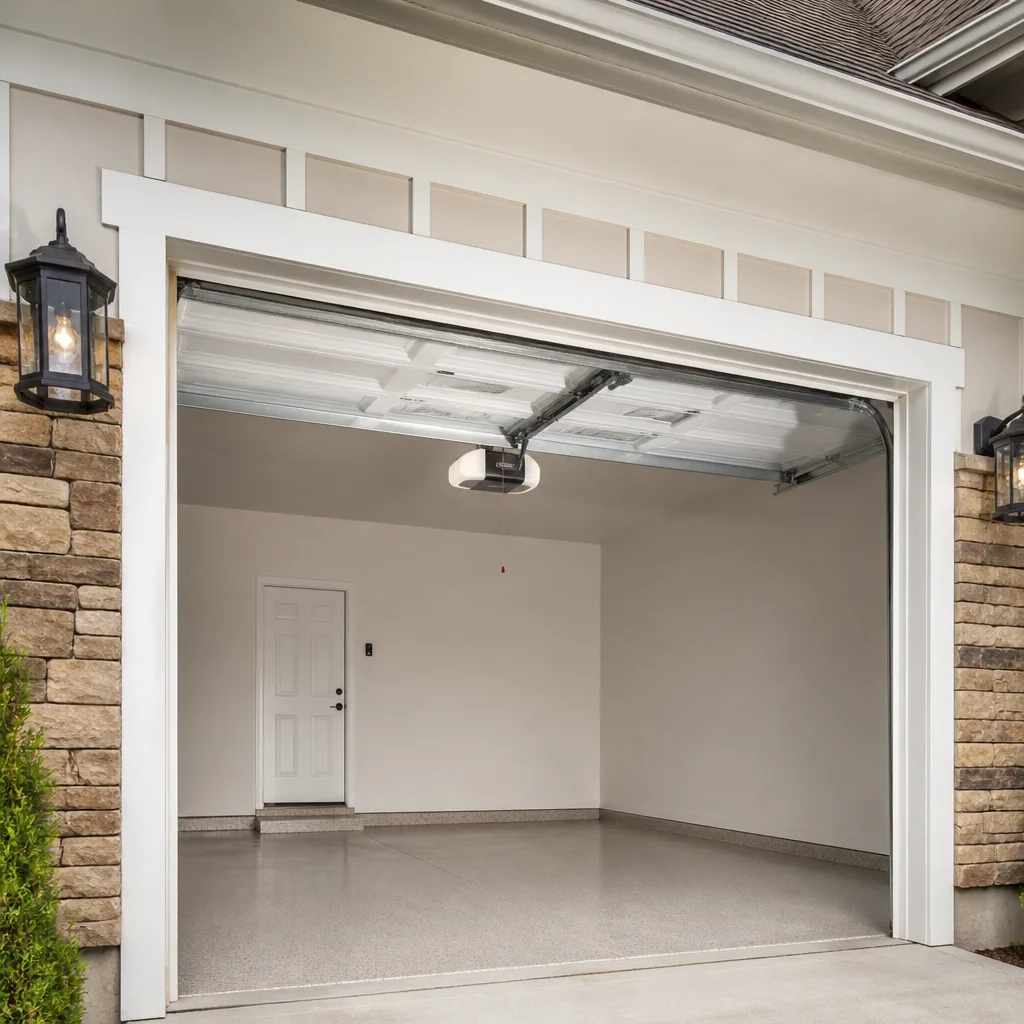 Chamberlain openers
Full 25-point door and opener safety check with every visit - springs, cables, rollers, tracks, and your LiftMaster or Chamberlain opener included
You get a price before we start. It does not change when the pro arrives.
Get your free estimateDIY vs Professional Garage Door: The Pinellas Park Homeowner’s Decision Guide
Most garage door advice online splits into two useless camps: “never touch it” and “here’s how to wind a torsion spring yourself.” Both miss the point. The real question isn’t whether you’re handy enough. It’s whether the specific task in front of you carries injury risk, voids a manufacturer warranty, or needs a licensed contractor under Florida law. A garage door is a system of springs, cables, tracks and an opener, and each part has its own threshold. Some maintenance is genuinely homeowner work and saves you a service call in Pinellas Park. Some repair can hurt you badly or cost twice as much to undo. This guide draws that line job by job so you don’t under-hire on the dangerous stuff or over-hire on the easy stuff.
Quick Answer
Routine maintenance like lubrication, sensor alignment, remote reprogramming and weatherstripping replacement is safe and cost-effective to do yourself. Spring, cable, and opener-internal work is not: it carries real injury risk, can void manufacturer warranties, and in some cases requires a licensed contractor in Florida. When in doubt on a high-stress repair, call a professional. For anything involving springs or cables, that’s the right call every time.
Styles & brands we work with
- Raised-panel steel
- Carriage house
- Modern flush
- Full-view glass
- LiftMaster openers
- Chamberlain openers
Table of Contents
- Where the DIY Line Actually Falls
- Tasks That Are Genuinely Safe for a Homeowner
- Which DIY Repairs Void Your Manufacturer Warranty
- Florida Licensing Law: What Requires a Contractor
- What a Botched DIY Repair Actually Costs
- How to Spot a Good YouTube Tutorial and a Bad One
- When to Call a Professional
- Frequently Asked Questions
Where the DIY Line Actually Falls
The DIY versus professional question for garage doors is decided by stored energy, warranty language, and licensing. Skills don’t enter into it. A confident homeowner with good tools can still be badly hurt by a wound torsion spring, and a homeowner with no mechanical background can safely swap a rubber bottom seal in fifteen minutes. The task determines the answer, not the person.
We think about garage door work in three tiers. Picture the jobs stacked from low risk to high risk, and the choice becomes obvious at each level.
- Low energy, low risk: lubrication, sensor alignment, remote programming, weatherstripping, visual inspection. These involve small forces, no stored energy under load, and no interaction with the door’s lifting mechanics.
- Moderate energy, moderate risk: track adjustment, roller replacement, opener wall-button or safety-reverse testing. These need care, correct torque and a solid understanding of how the door moves, but nothing is under lethal tension when you do them right.
- High energy, high risk: torsion and extension springs, lift cables, cable drums, bottom brackets, opener internal gears and circuit boards. Torsion springs hold hundreds of pounds of force when wound. Cables under that load can whip. This tier is where injuries happen.
In Pinellas Park, many homes sit on slab construction with low-clearance garages and standard 7-foot doors, which means torsion springs mounted on a shaft above the door are the most common setup. That configuration is also one of the most dangerous to touch. A spring that’s wound under tension looks unremarkable. It is not. Loosening the wrong set screw or removing a winding bar while the spring is live releases all that force at once. There’s no gradual warning.
That’s why we say the line isn’t about skill. It’s about physics, warranty terms and law. Get the tiers straight and you can stop guessing whether to call someone. If the task sits in the bottom tier, do it. If it sits in the top, don’t. This holds anywhere in Pinellas Park, from a 1970s ranch near the center of town to a newer build on the east side.
Tasks That Are Genuinely Safe for a Homeowner
Four maintenance jobs on a residential door are safe for a homeowner and worth doing before you pay anyone: lubrication, safety-sensor alignment, remote and keypad programming, and weatherstripping replacement. None of them involve the springs or cables, and all of them prevent bigger problems. These are the tasks we happily walk people through over the phone rather than booking.
- Lubrication: a light coat of garage-door-specific lubricant on the torsion shaft bearings, hinges, rollers and the track’s curve points keeps things quiet and slows wear. Wipe off excess. Skip the springs unless your manufacturer’s label says otherwise, and never grease the track’s straight travel surface where the rollers ride.
- Sensor alignment: the two small photo-eye sensors at the bottom of your tracks need to face each other and light up steady. Nudge the bracket, confirm both LEDs are solid, and test by waving an object across the beam while the door closes. The door should reverse. If it doesn’t, stop and call.
- Remote and keypad programming: whether it’s a LiftMaster or a Chamberlain unit, pairing a new remote or resetting a keypad PIN is a button sequence in the manual, not a service call. This is the single most common job people overpay for. It’s a ten-minute fix.
- Weatherstripping replacement: the rubber bottom seal and the side and top trim keep rain and debris out and help the door seat. Sliding in a new bottom seal with the door up and the opener disconnected is homeowner work.
A fifth, quieter task is a visual check. Look for frayed cables, springs that have an obvious gap or broken coil, and any door that hangs crooked. You’re not fixing it. You’re spotting it before it fails.
Every garage door brand we service – Raynor, LiftMaster, Chamberlain, Genie, Clopay, Amarr, Wayne Dalton, Craftsman and others – uses the same basic sensor and remote logic. If you can follow a manual, you can do the bottom tier. Where people get hurt is when a bottom-tier mindset gets applied to a spring. That’s why our technicians have up to 15 years of experience and still treat every torsion job with both hands and the door clamped. Some tasks just aren’t worth gambling on.
Which DIY Repairs Void Your Manufacturer Warranty
DIY work on the door’s lifting system, opener internals, or panel installation can void the manufacturer’s warranty on that component. The language differs slightly by brand, but the pattern is consistent. Openers and door panels carry the manufacturer’s warranty, and any modification or repair by someone other than a qualified installer or service company gives the maker grounds to deny a claim.
Here’s the practical translation. When a warranty document says the coverage is void if the product is “altered, modified, or repaired by an unqualified person” or “installed other than as directed in the owner’s manual,” that’s the clause doing the work. Attempt a spring swap or an opener board replacement yourself and you may be on your own if that component fails. You might also see the phrase “improper installation or repair by anyone other than a licensed or qualified technician voids the warranty.” That covers a lot of ground.
On door panels, the warranty concern usually centers on installation and adjustment rather than maintenance. If you remove a Clopay panel and re-hang it slightly out of square, you can stress the section and the hinge points. When the panel cracks, the maker can point to your work. On openers, the sensitive zone is the electronics and the gearhead, plus any change to the travel limits or force settings. A LiftMaster logic board you replaced with a third-party part, or the opener you reconfigured outside its manual’s steps, is a warranty problem waiting to surface.
The takeaway: maintenance doesn’t void coverage, and neither does changing a remote battery. Touching the parts that required a trained installer when the product was new does. In Pinellas Park, we see plenty of doors where the homeowner did careful maintenance for years and then attempted one spring change. Repairs after that point get more complicated for everyone. Keeping your manual and the warranty card on hand makes this easy to check before you start.
Florida Licensing Law: What Requires a Contractor
Florida law requires that many garage door repairs be done by a licensed contractor, which is the line that most DIY advice online ignores. The work is regulated under the state contractor licensing framework, and how it applies to a garage door on a residential property in Pinellas County depends on the task.
Here’s how to think about it. The state splits home-improvement contracting into licensed categories, and garage door installation and repair commonly fall within that scope when performed for hire. The homeowner doing their own work on their own home is a different case: you can usually maintain and repair your own property without holding a license. What you cannot do is hire an unlicensed person to do the work. If someone knocks on the door offering a spring swap for cash, the relevant question is not whether they can do it, but whether they’re allowed to be doing it.
Where the law touches your project
- Installation and replacement: new door and opener installation is generally contractor work when it’s for hire. It may also require a permit, which depends on your city or county building department. Ask before you buy.
- Repair by a third party: if you’re hiring someone to repair a spring, cable, opener or panel, that person needs to be properly licensed for that scope. Ask for the credential and verify it, no matter what the job looks like.
- Your own maintenance: lubrication, sensor alignment, programming and weatherstripping fall outside contractor licensing because they’re ordinary homeowner upkeep. No one is stopping you.
- Permits: most significant structural or electrical changes to a garage door system should be checked with the Pinellas Park or Pinellas County building department. Requirements vary, so get the answer directly rather than trusting a neighbor’s recollection.
We deliberately don’t quote specific code sections here, because the rules and the local permitting process can change and the fast answer is always the building department. What we will say is this: when you hire, the person on the job should be licensed and insured as their state requires, and you shouldn’t have to ask twice. That’s the standard a Pinellas Park homeowner should hold every garage door professional to, whether it’s a LiftMaster opener repair or a full door replacement.
What a Botched DIY Repair Actually Costs
A failed DIY repair on a garage door often costs more to fix than the original job would have, and the numbers are worse than homeowners expect. That’s the honest pattern. The work is not usually cheap to begin with, but the undo is where the bill really grows.
The three failure modes we see most in Pinellas Park all start the same way. A homeowner tries a bottom-tier mindset on a top-tier task, something slips or doesn’t seat correctly, and the door is now worse than when they started. The repair turns into two jobs: fix the original problem, then fix the damage.
- Spring installation errors: an incorrectly wound spring, a mismatched wire gauge, or a spring not seated on the shaft evenly can take the whole torsion system down. You’re now paying for correct parts plus the labor to get the door balanced, which is heavier than a straightforward spring swap.
- Cable drum damage: a cable that spools unevenly on the drum makes the door rise crooked. Forcing it can gouge the drum, and sometimes the shaft. That’s a bigger repair than the cable you started with.
- Panel misalignment: forcing a stuck door or re-hanging a section slightly off can strain the hinges, pop a roller out of a track, and in the worst case crack a panel. Replacing a single panel is a specific order with a lead time, so your garage may sit restricted in the meantime.
Then there’s the delay cost. When a door is stuck open, your home isn’t secure, and when it’s stuck closed your car is pinned inside. A quick repair call usually closes that gap in a short window. A DIY attempt that fails on a weekend means you’re waiting for help while the door sits in a compromised state.
We don’t want to scare you into calling for a sensor reset. We do want to be direct about the pattern: the DIY jobs that go wrong on a garage door are almost always the high-energy ones, and the repair bill after a failed attempt is rarely smaller than it would have been. When a cable, spring, or drum is involved, that math decides the answer before you start.
How to Spot a Good YouTube Tutorial and a Bad One
A trustworthy garage door tutorial shows evidence that the creator works with these systems professionally. The useful ones look different from the performative ones, and you can tell them apart in about two minutes. Here’s what to look for.
Signs the creator actually knows the trade
- They name the brand and model: a real tutorial says “this is a LiftMaster chamberlain-style opener” or “this is a Raynor panel” rather than treating every door as identical. Garage door systems vary, and the brand-specific details are the giveaway.
- They flag what not to do: an experienced tech will say “do not remove these bars while the spring is under tension” and explain why. A performative creator skips the warnings because they slow the video down.
- They show the door is clamped or secured: the first step in any real spring or opener-travel video is securing the door so it can’t move under load. If that step is missing, stop watching.
- They use the right terminology: torsion shaft, winding bars, cable drum, bottom bracket, safety-reverse test. Precision in language tracks with precision on the job.
- They acknowledge their limits: a real tech says “if you’re not comfortable, call someone.” A performative creator invites everyone to attempt a spring replacement because that’s the content that gets clicks.
Red flags to walk away from
- No safety warnings, or warnings buried in a pinned comment instead of the video.
- Time-lapsed spring work with no explanation of the tooling or the door’s energy state.
- “This works on any door” claims. It doesn’t. Raynor, Clopay, and LiftMaster all have different internals.
- A creator who advertises their own repair business in the same breath as telling you to DIY. That’s a conflict.
Our rule of thumb: if the tutorial ends with a safety check, it’s worth following. If it ends with “like and subscribe,” it’s not. For any step that involves the torsion shaft, the drum, or opener internals, a video is not a substitute for the tooling and the training. That’s when it’s time to call. If you’re ever midway through a tutorial and it’s not going the way the video shows, stop and reach out rather than pushing through.
When to Call a Professional
Call a professional when the task involves springs, cables, cable drums, bottom brackets, opener internals, or a door that’s stuck open, won’t close, or won’t lift correctly. Those are the scenarios where safety, warranty and licensing all point the same way. If you’re unsure which tier a job falls into, it’s safer to assume the higher one.
For a spring that has visibly broken, a cable that’s come off its drum, or a door hanging crooked off its track, that’s a same-day call, and we treat it that way. Call us at (833) 868-2268 and we’ll get an experienced technician moving. Our technicians have up to 15 years of experience and every call is handled by someone whose sole specialty is garage doors. We work on all the major residential brands, from Genie and Chamberlain to Clopay and Amarr, and we don’t hand your door to a general handyman who rarely touches one.
For a door that’s stuck open and leaving your home unsecured, or one that’s stuck closed and pinning your car, we take those calls seriously. Our emergency service is real availability, not a marketing line. Garage Door Repair Pinellas Park offers free estimates in Pinellas Park, and we’ll quote before any work starts. Call (833) 868-2268.
See the difference
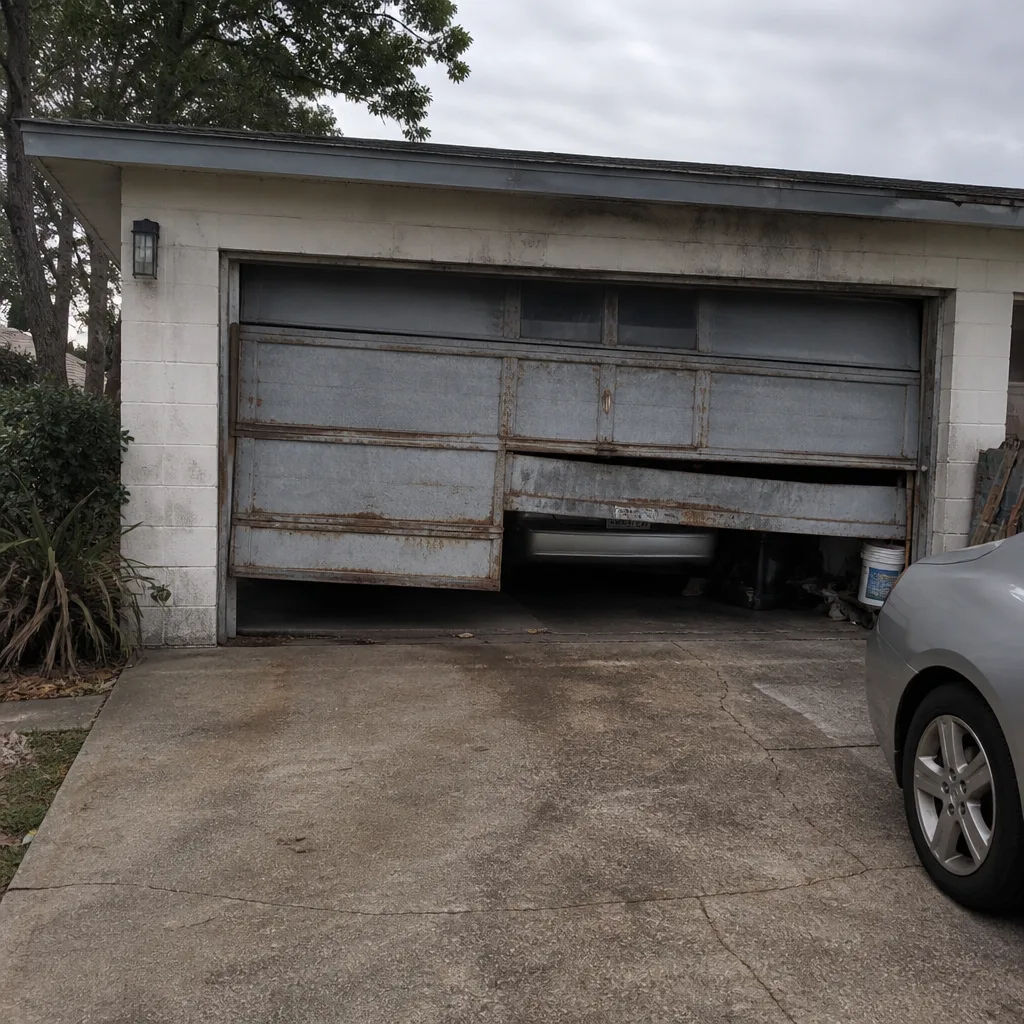 Before
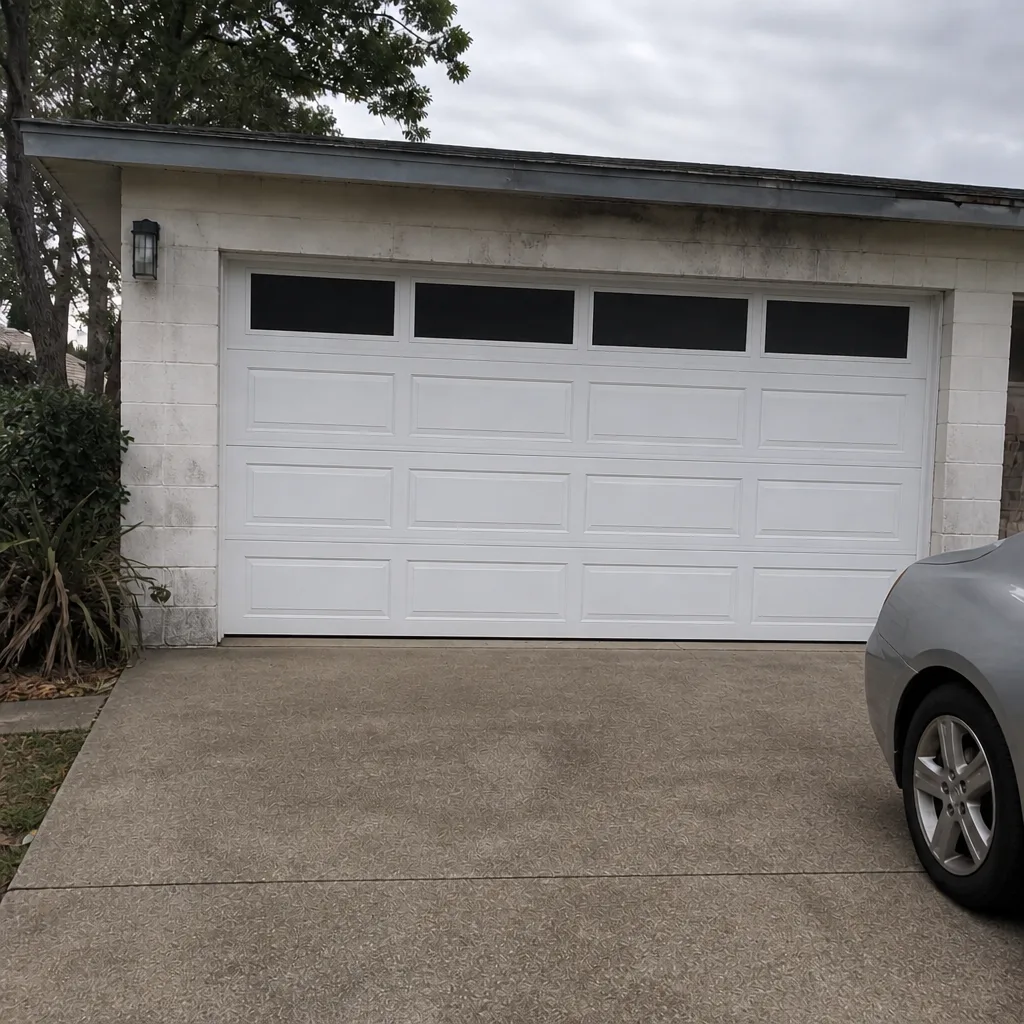 After
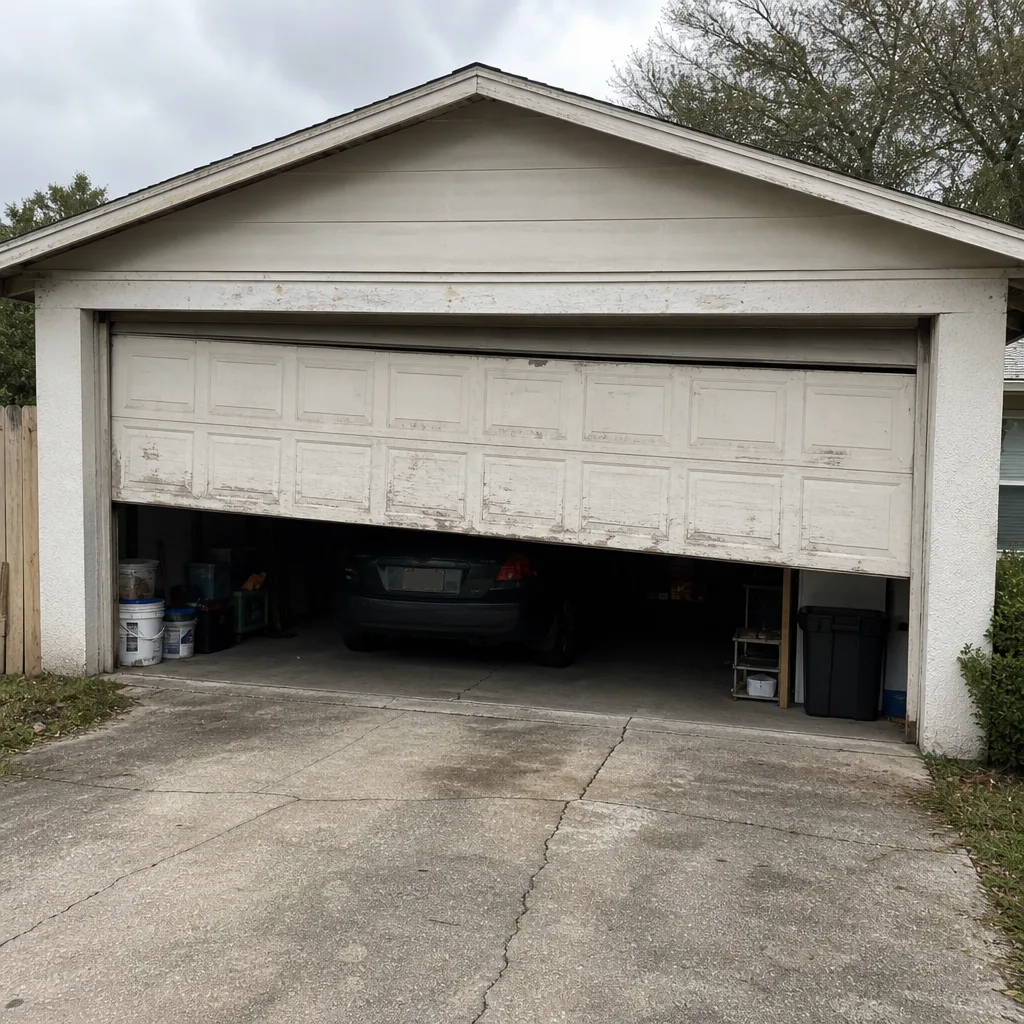 Before
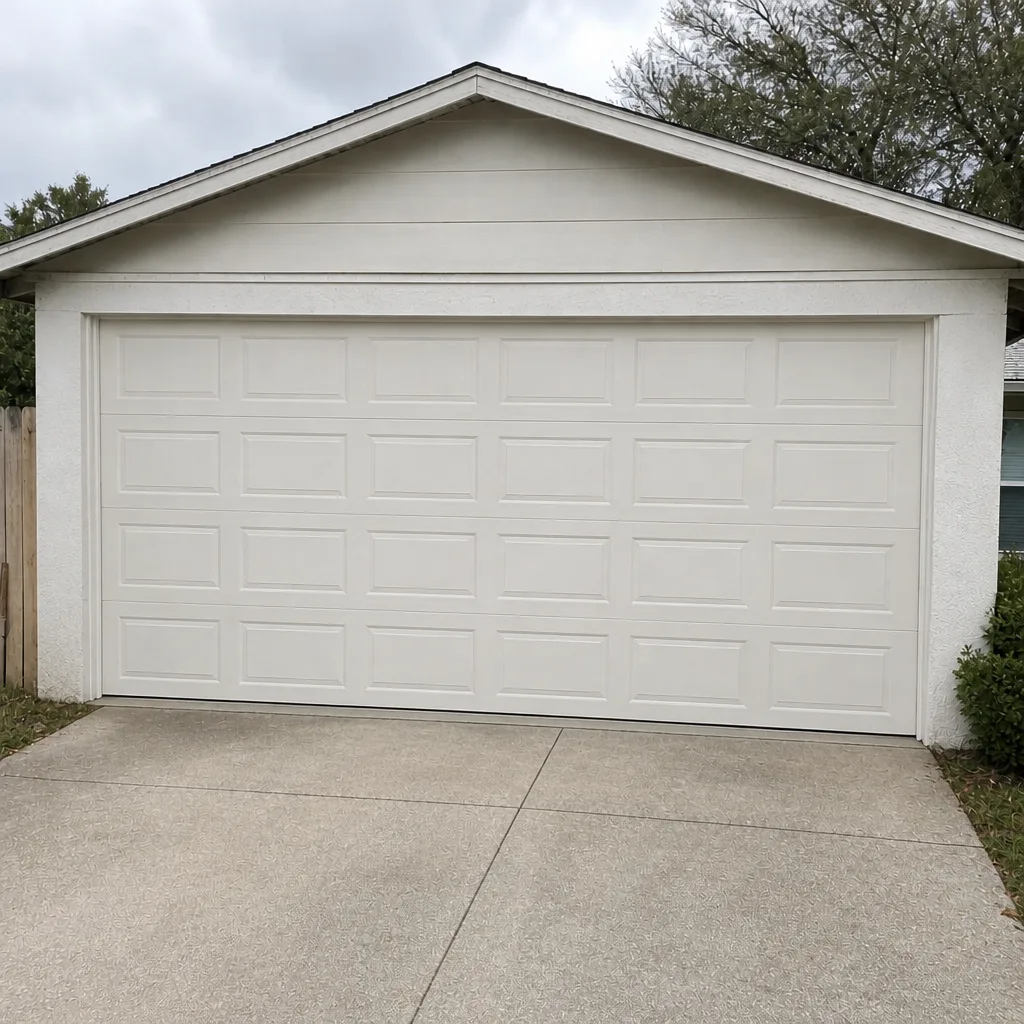 After
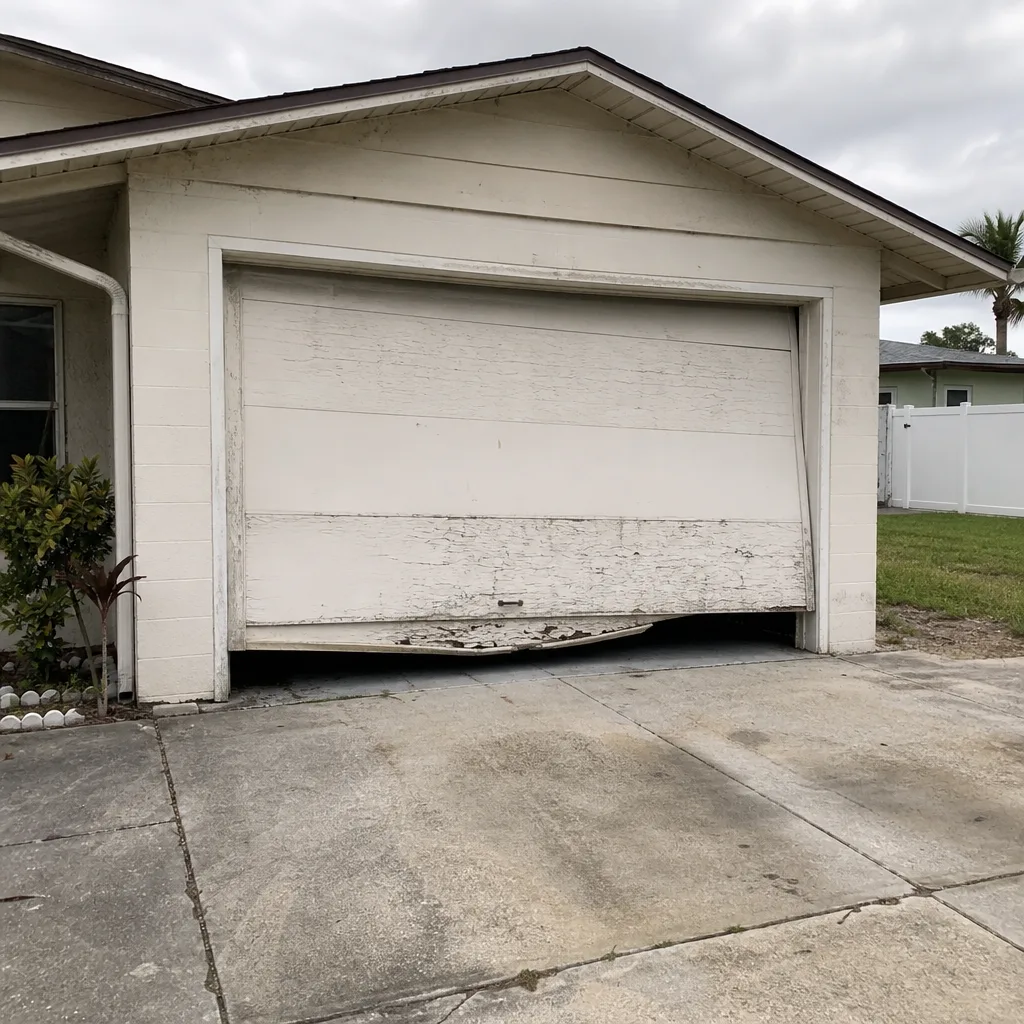 Before
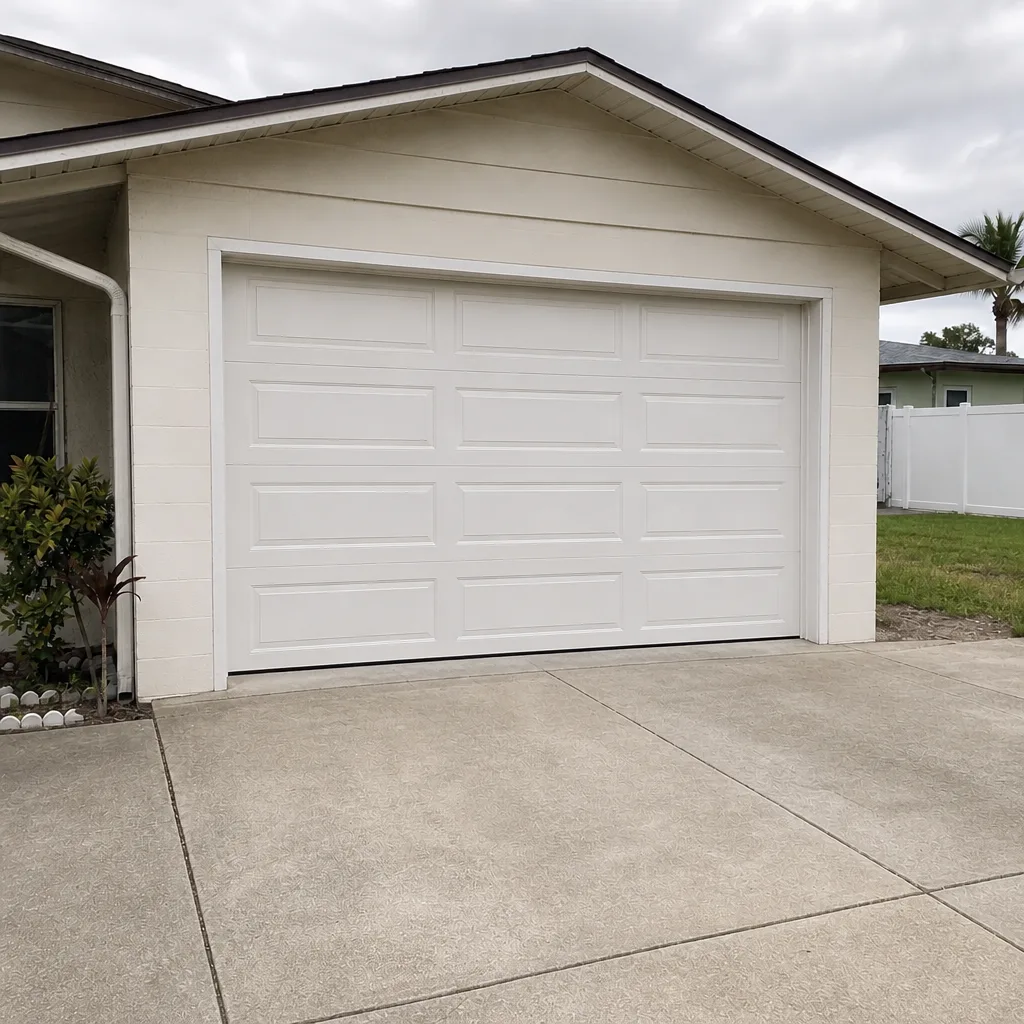 After
Frequently Asked Questions
No. Do not attempt a torsion or extension spring repair yourself. A wound spring holds hundreds of pounds of force, and releasing it unexpectedly is how people are seriously injured every year. Beyond the danger, spring work sits squarely in the tier that can void a manufacturer warranty and may require a licensed contractor. This is the single clearest “call a professional” task on a garage door. Call (833) 868-2268 if your spring has failed. Estimates are free.
Lubrication, safety-sensor alignment, remote and keypad programming, weatherstripping replacement, and visual inspection are safe homeowner jobs. None of them involve the springs, cables, or opener internals. They also happen to be the most common things people overpay a service call for, so handling them yourself is a real saving. Anything that touches the torsion shaft or the lifting cables is a different story. Call a professional for that.
DIY work on the lifting system, opener internals or panel installation can void the manufacturer’s warranty on that component. Maintenance like lubrication and battery changes does not. The clause to look for in your manual is language voiding coverage if the product is altered, modified, or repaired by an unqualified person. Raynor, Clopay and LiftMaster documents all use variations on that idea. If it’s a big-ticket part, call and let a qualified technician touch it. Call (833) 868-2268 for a free estimate.
For repairs and installations performed for hire, Florida requires proper licensing, and how it applies to a residential garage door in Pinellas County depends on the task. Homeowner maintenance on your own property generally sits outside licensing requirements. The line to remember is that you cannot hire an unlicensed person to do the work, and a contractor you do hire should be licensed and insured as the state requires. Ask your city or county building department for specifics on your project.
A botched DIY repair usually costs more than the original job would have, sometimes significantly so, because it turns one repair into two. A mis-wound spring can take the whole torsion system with it, a gouged cable drum is a bigger repair than the cable, and a forced panel may need replacing with a lead time. We’ll quote a free estimate in Pinellas Park before any work starts, so you know the number up front. Call (833) 868-2268 for a free estimate.
A tutorial can help with the bottom-tier tasks like sensor alignment and weatherstripping, but it is not a substitute for hands-on training on spring, cable or opener-internal work. Check whether the creator names the specific brand and model, shows the door secured before any adjustment, and includes real safety warnings. If a video skips those, walk away. For the dangerous tier, we handle it with correct tooling and a balanced door at the end. Call (833) 868-2268 if you’d rather not risk it on your own.
The Bottom Line
The DIY versus professional decision on a garage door is not about how capable you are. It’s about which tasks carry lethal stored energy, which ones void a manufacturer warranty, and which ones need a licensed contractor under Florida law. Lubrication, sensor alignment, remote programming and weatherstripping are yours to do. Springs, cables, cable drums and opener internals are not. A botched attempt on the high-energy tier usually costs more to fix than the original job, and it can leave your home unsecured or your car trapped while you wait for help. Pinellas Park homeowners who know which tier a job falls into save both money and risk. When in doubt, call (833) 868-2268 for a free estimate.
For the dangerous tier of repair, the right move is a same-day call to Garage Door Repair Pinellas Park. We work on your brand, from LiftMaster and Chamberlain openers to Clopay and Wayne Dalton panels, and we treat spring work with the care it demands. If your door is stuck or won’t close, that’s garage door repair we handle with real urgency, and a garage door opener repair that gets to the cause instead of guessing at parts. When the spring is what failed, our garage door spring repair is the work we’d want done on our own homes. Our technicians have up to 15 years of experience, and every job is quoted and agreed before work starts. Call (833) 868-2268 for a free estimate.
Written by the team at Garage Door Repair Pinellas Park.